




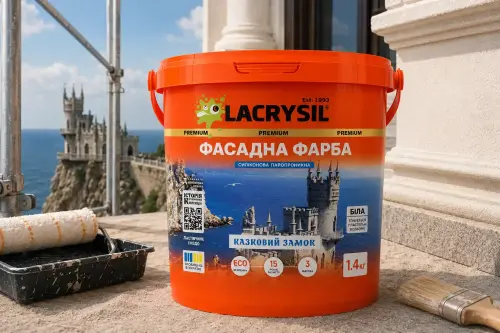
facade paints are intended for protective and decorative painting of exterior wall surfaces. This subcategory includes acrylic and silicone water-dispersion paints for prepared mineral bases such as concrete, brick, plaster and other facade surfaces.
What facade paints are used for
- refreshing the exterior appearance of a facade without replacing the finish;
- creating a matte white coating on prepared mineral bases;
- protective painting of exterior wall structures within the properties of the specific material;
- supporting coating vapour permeability when this is included in the product characteristics;
- choosing a coating by base type, hiding power, protection period and outdoor operating conditions.
How to choose a facade coating
- acrylic water-dispersion paints suit typical facade jobs on prepared concrete, brick and plastered bases;
- silicone paint is relevant when hydrophobic properties and resistance to outdoor conditions matter;
- for a light finish, compare hiding power class and the recommended number of coats;
- for a long-lasting result, consider the protection period, facade condition and quality of surface preparation;
- before choosing, check application temperature, primer compatibility and manufacturer recommendations.
What to check before painting a facade
- the surface should be dry, solid, even and cleaned of dust, dirt, efflorescence and unstable old coatings;
- painting should be done in stable weather, without rain, strong wind or surface overheating;
- porous or weakened bases should be prepared and primed according to recommendations for the specific material;
- paint is mixed until uniform and, if needed, diluted with water within the instructions;
- for an even coating, follow the coverage rate, number of coats and drying time between applications.