


Painting Radiators Without the Headache: Odorless Radiator Enamel
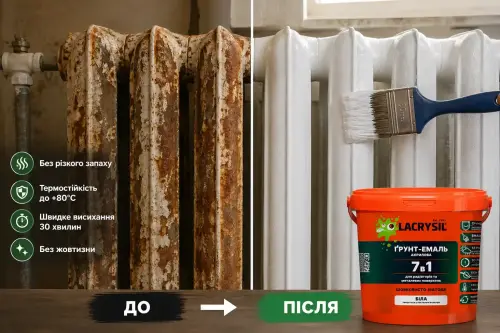
You can refresh radiators without harsh odor or long waiting times. For living rooms, it is better to choose a water-based heat-resistant enamel.
We use necessary cookies for the cart, session, and security. Analytics cookies help us improve the site and can be turned off. Marketing cookies are enabled only with your consent. Learn more
Lacrysil App
Add the store to your home screen for faster access and an app-like full-screen experience.
It installs in a couple of taps — here is how.
Tap in the Safari toolbar
Choose “Add to Home Screen”
To install the app, open this site in the Safari browser.
Search
Start typing to see suggestions.
Blog
Choose a category, tags, and sorting to quickly find the right article.
Showing 1–8 of 8 articles
You can refresh radiators without harsh odor or long waiting times. For living rooms, it is better to choose a water-based heat-resistant enamel.
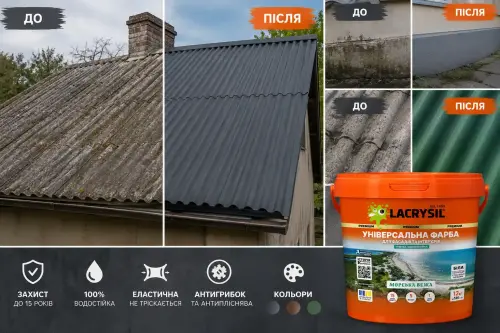
Has the roof lost its color, has the slate developed microcracks, and does the plinth suffer from rain? Rubber paint creates an elastic protective barrier.
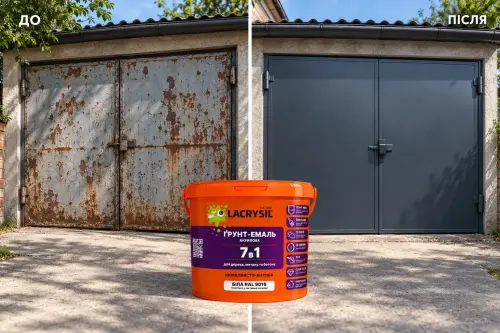
How to paint garage gates, doors, shelving and walls, and what to do with a concrete floor that cars drive on.
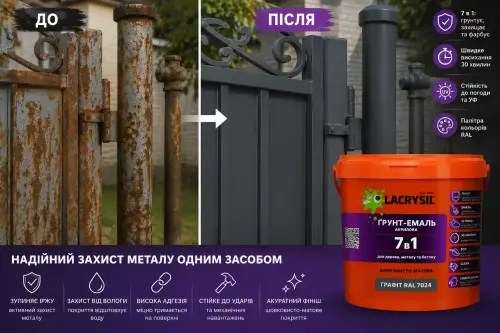
Refreshing metal fences, grilles, or pipes does not have to take several days. Primer-enamel combines preparation and final protection in one material.
Children’s handprints in the hallway, grease in the kitchen, and humid steam in the bathroom are a serious test for walls. These areas need paint that can be washed often.
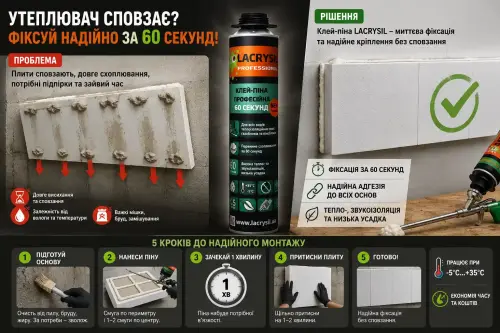
It’s a familiar scenario: you apply the adhesive, press the panel or expanded polystyrene against the wall, and the material slowly slides down. You have to look for props, hold the board with your hands, or redo the work. Let's break down why this happens, what the main disadvantages of traditional mixtures are, and how to solve the problem using professional adhesive foam.
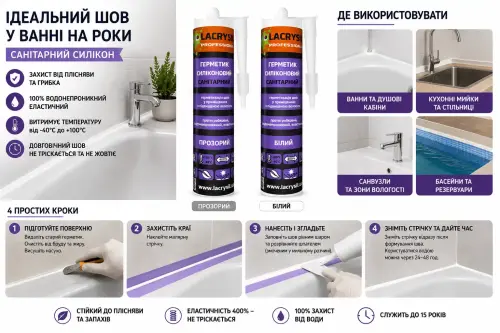
Imagine this: you have made a nice bathroom renovation, but after a few months the joint between the bathtub and the tile has darkened. Black mold has appeared, the seam has started to peel away, and after a shower water quietly runs onto the floor or, even worse, down to the neighbors below. You try to wash it off with aggressive chemicals, but the buildup keeps coming back.The problem is not your cleaning. The problem is the wrong sealant or an old one. In areas where water constantly pours and steam lingers, ordinary construction fillers do not work. You need a specialized sanitary silicone — an elastic material with powerful antifungal additives that reliably seals the joint.
When planning repairs or installation work, it is important to calculate the required amount of materials in advance. This allows you to avoid unnecessary expenses and situations when the sealant runs out at the most crucial moment. In this article, we will look at what the sealant consumption depends on, how to calculate it correctly, and how much material will be needed for different types of joints.
0 items