


Where is sanitary silicone absolutely necessary?
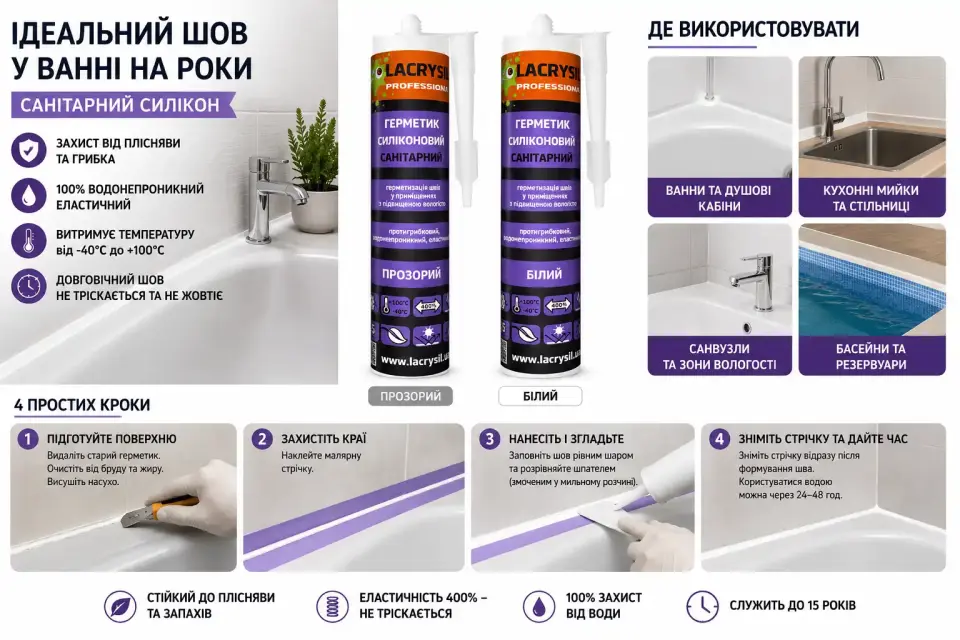
This material is made specifically for regular use in conditions of increased humidity and temperature changes (from -40°C to +100°C). Its main job is to keep water out and block fungal growth. Use it for:
Sealing joints around bathtubs, shower cabins, and trays.
Sealing gaps around kitchen sinks and countertops.
Repairing seams in bathrooms and areas near pools.
Important: Silicone adheres very well to ceramic, glass, and enamel, but it should not be applied to natural marble or mirrors without preliminary testing, so you do not damage the surface.
How to apply sealant perfectly: 4 professional steps
The most common mistake is applying new, clean silicone over old mold. That kind of seam will come loose within a week. To forget about repairs for years, follow these instructions:
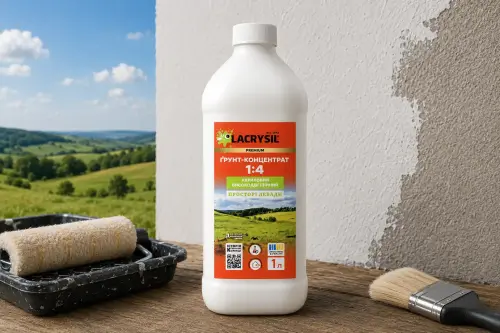
Remove the old problem completely. Cut away the old darkened sealant with a utility knife. Wash the joint, remove grease and soap residue, then be sure to dry the surface completely (you can use a hair dryer). Tip: for porous or weak bases, use LACRYSIL 1:4 primer concentrate.
Protect the edges. To get a seam as straight as in a hotel, apply strips of masking tape along the joint on the wall and on the bathtub itself.
Apply and shape. Using a gun, dispense the silicone in an even continuous layer without leaving voids. Immediately smooth the seam with a special plastic spatula (or a finger), pre-moistened in a soapy solution.
Remove the tape. Do this immediately after forming the seam, before the silicone has time to form a skin, so you do not tear the clean edge.
Leave the bathtub to dry. Water can be used after the seam has fully dried (24 - 48 hours).
Choose the material for your task
The LACRYSIL catalog has solutions for both spot repairs and large-scale waterproofing:
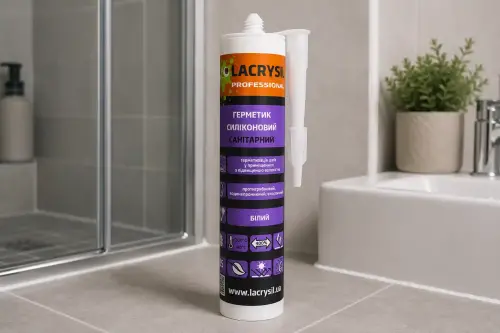
Silicone sealant “Sanitary” (White / Transparent): A classic choice for bathrooms. Available in small tubes (48-50 g) for repairing one joint or standard cartridges (0.28 kg). The transparent version is ideal for glass shower cabins.
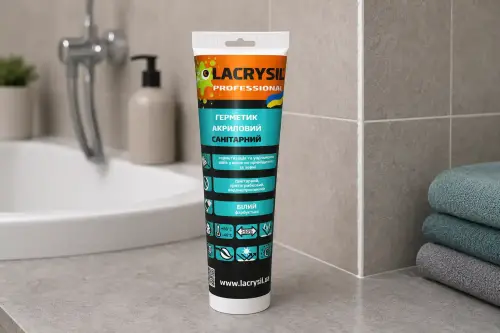
Acrylic sealant “Sanitary”: An alternative for areas where there is no direct water flow, but there is humidity and a need to paint the seam later (silicone cannot be painted).
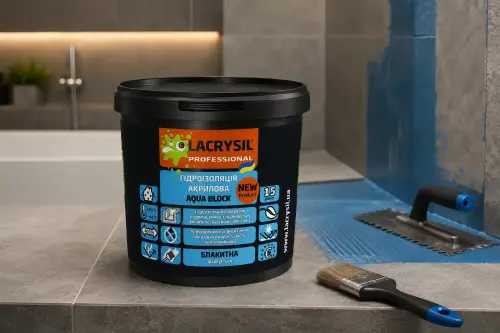
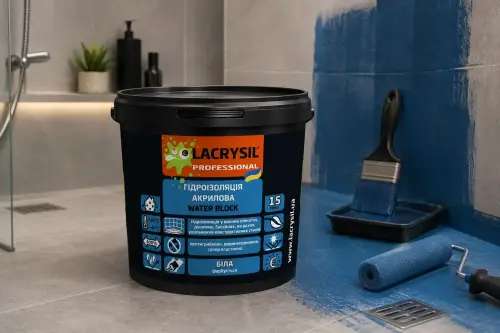
Waterproofing “Aqua Block” or “Water Block”: If you need to isolate not just a seam, but the entire wall or floor under tile before installing a bathtub, choose these acrylic mastics.
Frequently Asked Questions (FAQ)
How long will one cartridge last?
A standard cartridge of sanitary silicone usually covers 12 linear meters (when forming a 6x6 mm seam).At what temperature can silicone be applied?
The sealant can be applied in the range from +0°C to +40°C. The main thing is that the surface must be completely dry, without drops of condensation.Can silicone be applied to a wet joint if water is leaking?
No, under no circumstances. Silicone will not adhere to a wet base. First, eliminate the leak completely, dry the surface, and only then seal it.