Save to favorites
Add to compare
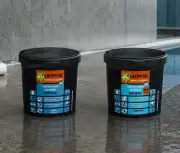
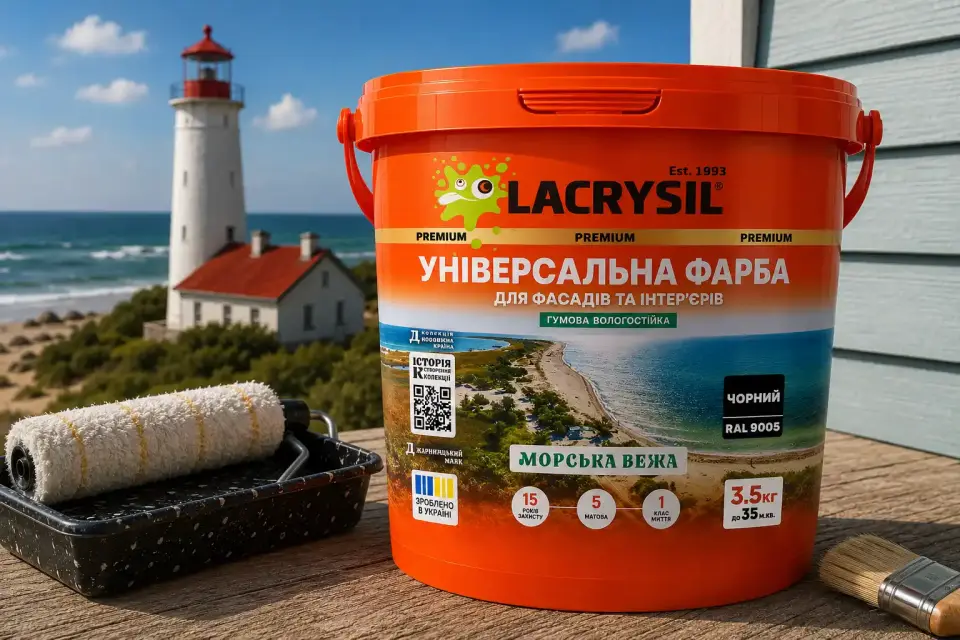
Sea tower universal acrylic rubber paint, RAL 9005 black, 3.5 kg
Universal acrylic rubber paint for protective and decorative painting of surfaces outdoors and indoors.
Specifications
- Color:
- RAL 9005 black
- Washability class:
- Gloss level:
- Matte, 5
- Fungicidal protection:
- Protection period:
- 15 years
- Application area:
- Outdoors and indoors
- Safety:
- Safe
- Packaging:
- 3.5 kg
- Durability:
- Aesthetic and mechanically resistant
- Thinner:
- Water
- Hiding power class:
- Application temperature:
- +5°C ... +35°C
Choose a variant
22 available
Sea Tower universal acrylic rubber paint is intended for protective and decorative painting of surfaces outdoors and indoors.
The paint is used for slate, roof tiles, ondulin, galvanized steel, aluminum, ferrous metal, profiled sheeting, asphalt, asbestos cement, concrete, foam concrete, aerated concrete, brick, plastered and filled surfaces, plywood, chipboard, cement-bonded particleboard, fibreboard, wood, plasterboard, and wallpapered surfaces.
The product specifications state outdoor and indoor use, washability class 1, hiding power class 1, matte level 5, fungicidal protection, water thinning, and a 15-year protection period when the manufacturer’s recommendations are followed.
The range has several ready RAL colors and pack sizes of 1.2 kg, 3.5 kg, 6 kg, and 12 kg. This helps choose a variant for a small repair, a separate structure, or a larger amount of work.
Before application, clean the surface from dust, dirt, unstable coatings, and poorly bonded particles. The substrate should be dry, strong, and level, and the application temperature should be within +5°C ... +35°C.
- suitable for exterior and interior work;
- used for roofing, facade, mineral, metal, and wood substrates;
- has washability class 1 and hiding power class 1;
- forms a matte coating with gloss level 5;
- has fungicidal protection and a stated protection period of 15 years when the manufacturer’s recommendations are followed;
- available in ready RAL colors and pack sizes for different work volumes.
- slate, roof tiles, ondulin, and profiled sheeting;
- galvanized steel, aluminum, and ferrous metal;
- concrete, foam concrete, aerated concrete, brick, and plaster;
- asphalt, asbestos cement, and filled surfaces;
- plywood, chipboard, cement-bonded particleboard, fibreboard, wood, and plasterboard;
- wallpapered surfaces if they are prepared for painting.
- 1.2 kg is convenient for a small area, repair, or trial painting;
- 3.5 kg suits a separate structure or local amount of work;
- 6 kg is useful for a medium area or several surfaces;
- 12 kg is suitable for a larger amount of exterior or interior work;
- colors are available as RAL 5005 blue, RAL 6005 moss green, RAL 3009 red brown, RAL 7046 gray, RAL 7024 graphite, RAL 9005 black, RAL 8017 chocolate brown, and RAL 9016 white;
- for surfaces that need regular cleaning, use washability class 1 as a key reference.
- prepare a dry, strong, and level substrate without dust, dirt, or unstable coatings;
- on metal substrates, check primer condition and corroded areas;
- on wood and mineral surfaces, remove poorly bonded particles;
- plan work at an application temperature of +5°C ... +35°C;
- mix the paint until homogeneous before use and thin with water if needed;
- apply evenly, considering the substrate type, application area, and recommended drying time between coats.
What is it suitable for?
Universal acrylic rubber paint for protective and decorative painting of surfaces outdoors and indoors.When is it not suitable?
Do not apply over dust, grease, moisture, chalky or weak coatings; difficult substrates need primer or a test area.What is the consumption or yield?
No separate consumption value is listed, so estimate from area, joint size, or recommendations for the specific application method.How long does the layer dry or form?
Let the layer fully form before loading. For difficult conditions, make a test area and check the instructions.What are the common mistakes?
Painting a weak base without primer, applying too thick a layer, wrong application temperature, and rushing between coats.