Save to favorites

Add to compare

Acrylic sealant “Colored”

Colored acrylic sealant for decorative and protective treatment of wooden structures, seams, gaps, and joints.

Specifications

Consumption:
12 linear m (4x4 mm seam)
Storage term:
18 months
Drying time:
24 - 48 hours
Operating temperature:
-40°C ... +80°C
Base:
copolymer-acrylate
Application temperature:
+10°C ... +35°C

Choose a variant

4 available

Sealant calculator

Coverage reference: 12 linear m (4x4 mm seam)

How will you apply?

Description

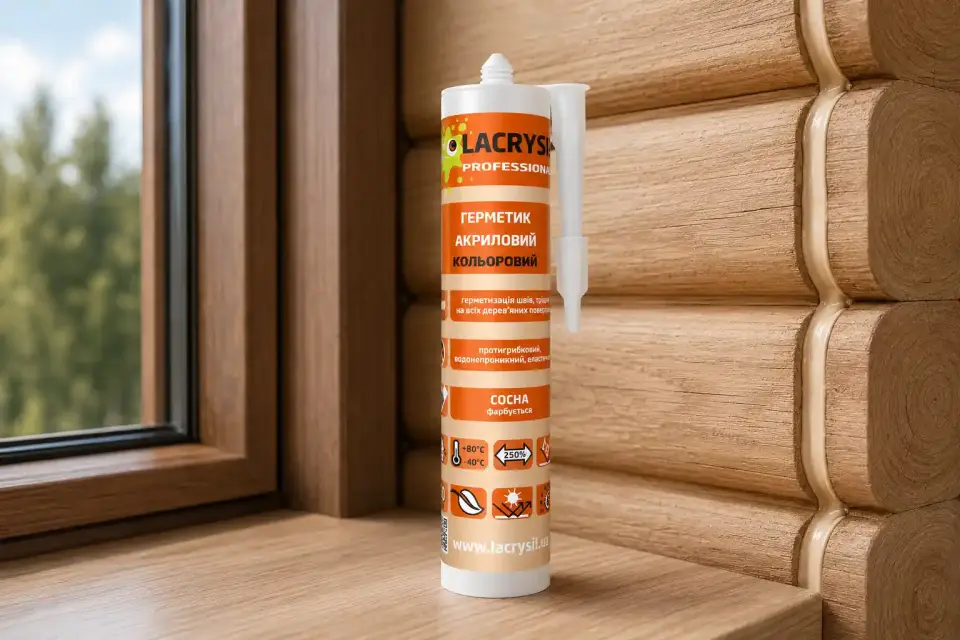
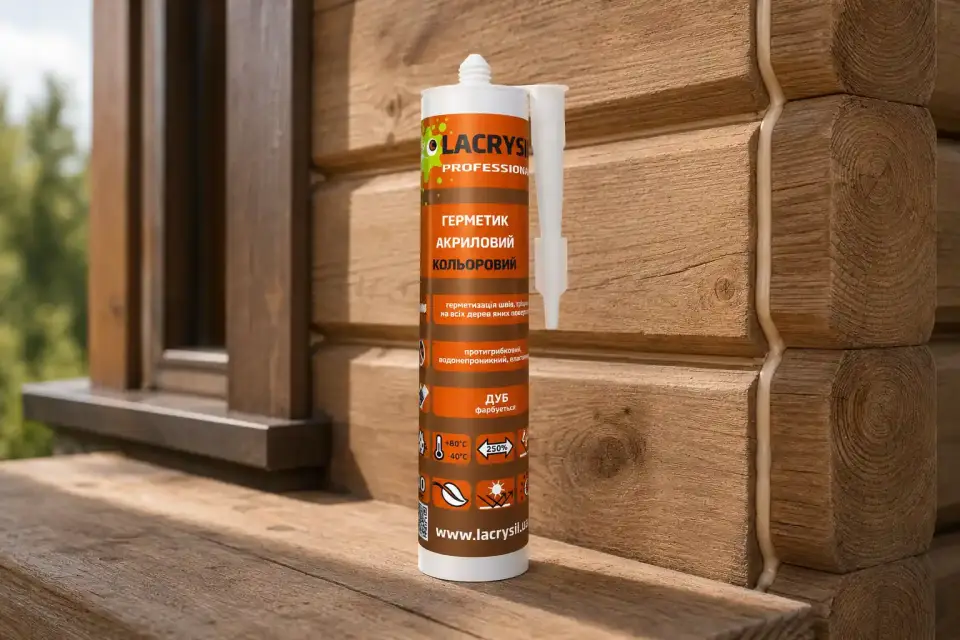
Acrylic sealant “Colored” is designed for decorative and protective treatment of wooden building structures. It is used when a seam, gap, crack, or chip needs to be filled while matching the shade to wood.

The material is suitable for wood products and wood-based structures, facade decor, joints in thermal insulation systems, brickwork, plastered surfaces, and other compatible construction substrates. It can also be used for gaps in plank and parquet floors, joints between skirting boards, trims, walls and floors, between timber and panels, and where wooden structures contact roofing elements.

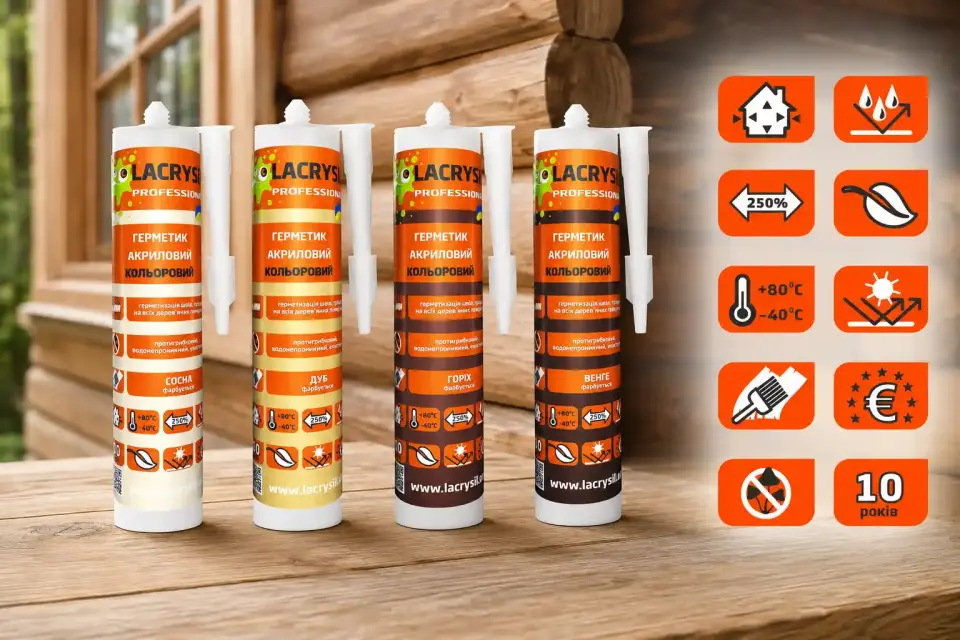
The sealant forms a dense, water-resistant, elastic layer that withstands mechanical loads, UV radiation, and external influences. Pine, Oak, Walnut, and Wenge colors help match the seam to natural wood or facade finishing.

Before application, surfaces should be dry, strong, level, and cleaned of dust, dirt, mould, grease and resin stains, other contaminants, and loose particles.

Use when the sealant and ambient temperature is +10°C ... +35°C. Apply the sealant in a continuous layer into the working cavity and shape the seam as needed. Recommended seam size is up to 5x5 mm; initial setting takes 10-30 minutes, final layer formation takes 24 hours, and water contact should be avoided for 48 hours.

Benefits
  • designed for decorative and protective treatment of wooden structures;
  • helps seal seams, gaps, cracks, and chips in wood;
  • available in Pine, Oak, Walnut, and Wenge colors;
  • forms a dense water-resistant and elastic layer;
  • suitable for facade, flooring, and repair joints on compatible substrates;
  • 0.4 kg pack size is convenient for local and repeated finishing work.
Where to use
  • seams, gaps, cracks, and chips in wooden products;
  • interlog and crown joints of log houses;
  • end cuts of logs and contact points between wood and roofing elements;
  • gaps in plank and parquet floors;
  • joints between skirting boards, trims, walls, and floors;
  • facade decor, brickwork, plastered surfaces, and thermal insulation system elements.
How to choose a variant
  • Pine suits light wood and natural yellowish shades;
  • Oak is useful for warm medium wood tones;
  • Walnut is suitable for darker brown seams and decorative joints;
  • Wenge suits very dark wood and contrasting facade elements;
  • all variants are 0.4 kg, so the choice mainly depends on the required seam color.
How to use
  • clean the substrate from dust, dirt, mould, grease and resin stains, and loose particles;
  • make sure the sealant and ambient temperature is within +10°C ... +35°C;
  • fill the working cavity evenly with a continuous layer;
  • shape the seam as needed, not exceeding the recommended 5x5 mm size;
  • allow for initial setting of 10-30 minutes;
  • after application, avoid water contact with the seam for 48 hours.
Compatibility table
Material / Base Concrete, brick, gypsum, plasterboard Stone, granite, marble Mirror, glass Wood, chipboard, fiberboard, MDF, plywood Tile, ceramic, porcelain Primed metal Plastic, PVC Polystyrene
Concrete, brick, gypsum, plasterboard
Stone, granite, marble
Mirror, glass -
Wood, chipboard, MDF, fiberboard, plywood
Tile, ceramic, porcelain -
Primed metal
Plastic, PVC - - -
Polystyrene
FAQ: use, consumption, and common mistakes
  • What is it suitable for?
    Colored acrylic sealant for decorative and protective treatment of wooden structures, seams, gaps, and joints.

  • When is it not suitable?
    Do not apply to wet, greasy, dusty, or weak substrates; permanent water immersion requires a separate compatibility check.

  • What is the consumption or yield?
    Product specification guide: 12 linear m (4x4 mm seam). For an exact estimate, consider area, joint size, application method, and substrate condition.

  • How long does the layer dry or form?
    Product specification guide: 24 - 48 hours. Cold, humidity, or a thick layer can increase the waiting time before loading.

  • What are the common mistakes?
    Applying over an old weak layer, skipping cleaning, wrong joint geometry, and water contact before the layer forms.

Video
Reviews (0)