


pcs.
Left after work:
We use necessary cookies for the cart, session, and security. Analytics and marketing cookies are enabled only after your choice. Learn more
Lacrysil App
Add the store to your home screen or desktop for faster access and an app-like full-screen experience.
Catalog
Popular categories
Search
Start typing to see suggestions.
Save to favorites
Add to compare
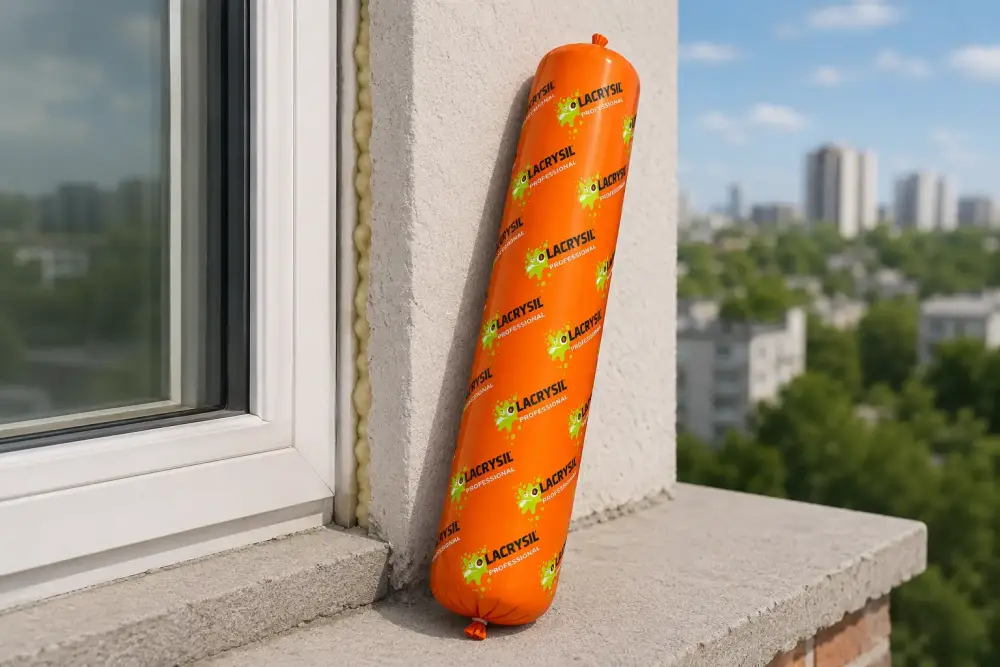
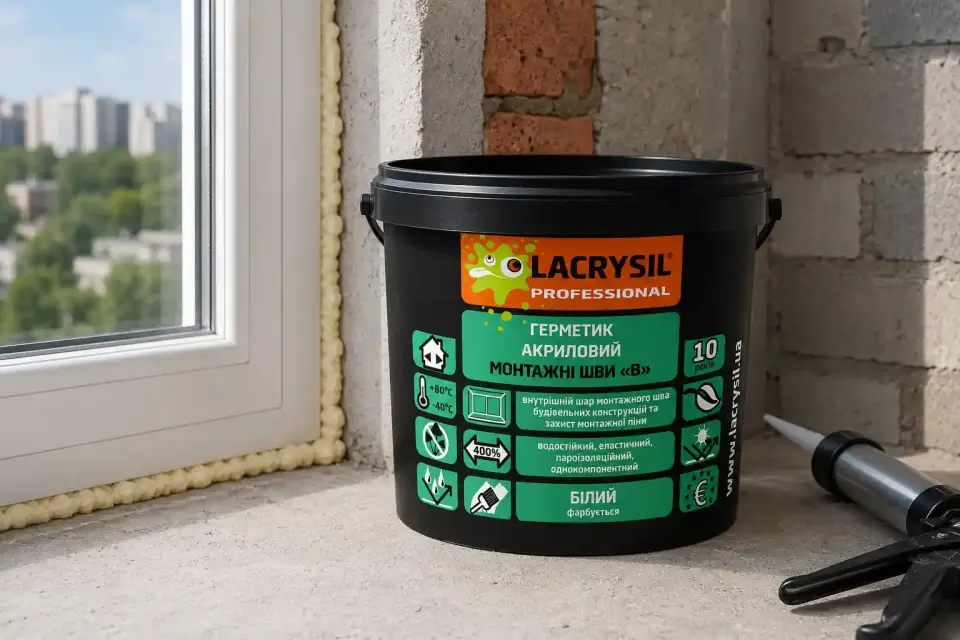
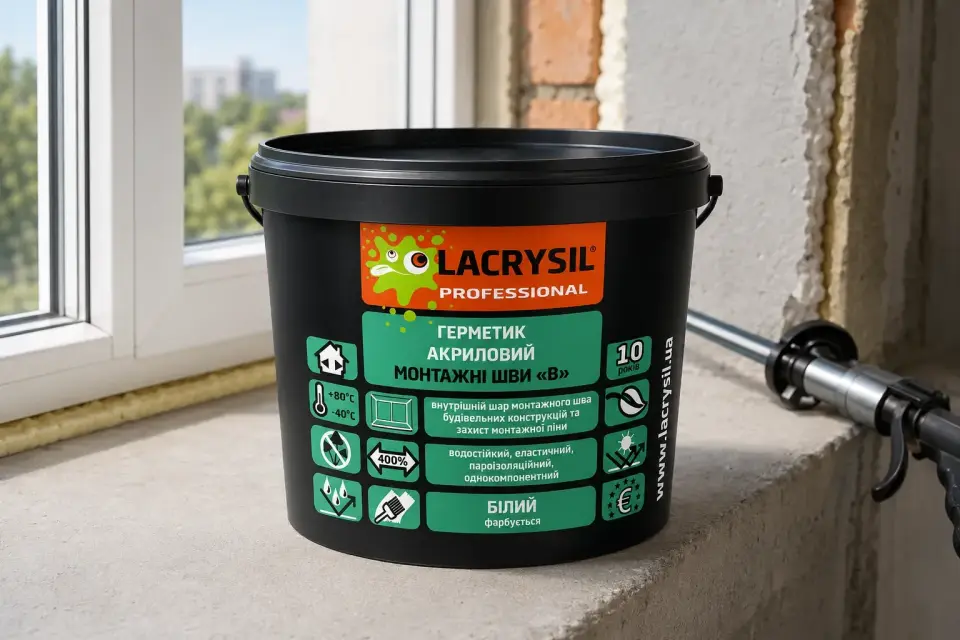
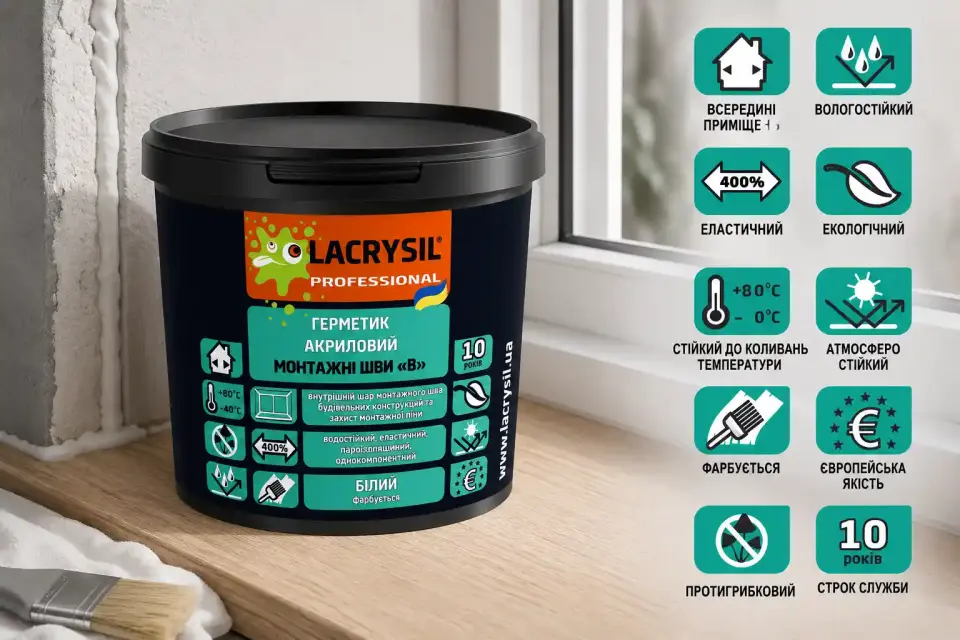
Acrylic sealant for interior installation seams, joints, and gaps around window and door blocks, as well as correcting defects in interior structures.
4 available
Coverage reference: 600 ml
Options by color
pcs.
Left after work:
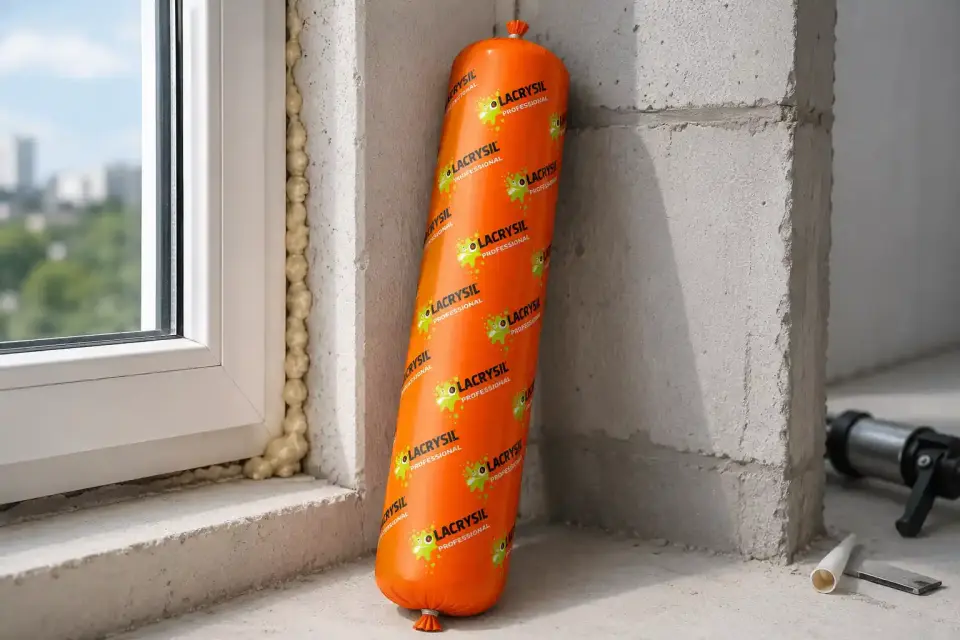
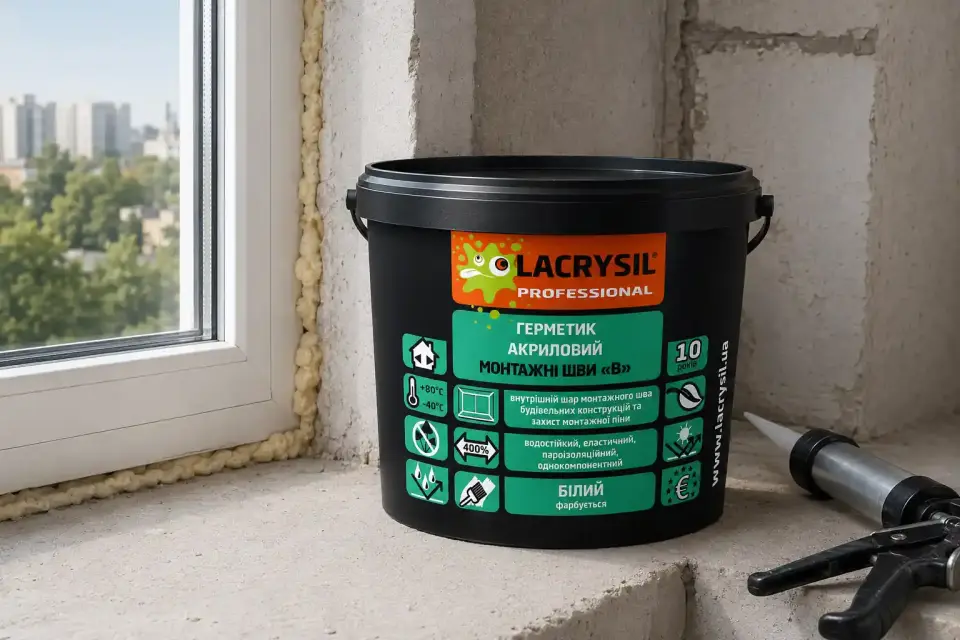
Acrylic sealant for installation seams “B” is used for sealing, filling, and neatly finishing interior installation seams. The material suits joints, connections, and gaps between interior structure elements.
The sealant is used for window and door block junctions with wall structures indoors, covering polyurethane foam seams, correcting local defects, and forming a neat seam line.
The material has a copolymer-acrylate base, white color, and is intended for work when the sealant, contact surfaces, and ambient temperature are within +5°C ... +35°C. After formation, the layer is designed for operation in the -40°C ... +80°C range.
Before application, working surfaces should be dry, strong, level, and cleaned of contaminants, deposits, and poorly bonded particles. Polyurethane foam in insulation seams and technological gaps should be neatly and evenly cut, without tears or surface defects.
Surfaces with signs of damage or a porous structure should be treated with Lacrysil primer concentrate diluted 1:10 and dried. Mix the product until homogeneous before use.
Fill the working cavity evenly with a continuous layer. Recommended seam dimensions are 3-5 mm wide and 3-3.5 mm thick, with 1-3 mm overlap onto the adjacent surface. Large cavities are filled gradually after the previous layer forms.
After application, level the layer with a spatula moistened in soapy water or shape the seam as required. Layer formation takes 24-48 hours and depends on seam size, substrate condition, and environmental conditions. Protect the finish layer from water contact for 72 hours.
Benefits
designed for interior installation seams;
helps cover polyurethane foam seams at window and door block junctions;
suitable for correcting local defects in interior structures;
compatible with many traditional building substrates according to the table;
white color is convenient for light interior surfaces and seams prepared for finishing;
available in 600 ml, 1.2 kg, 3 kg, and 7 kg pack sizes.
Where to use
interior installation seams around window blocks;
door block junctions with wall structures;
covering polyurethane foam seams indoors;
filling joints, connections, and gaps between interior elements;
local correction of defects in interior structures;
work on concrete, brick, gypsum, plasterboard, stone, wood, tile, primed metal, plastic, and PVC according to the compatibility table.
How to choose a variant
600 ml is convenient for local repair or one or two small seams;
1.2 kg suits several interior window or door block junctions;
3 kg is useful for a series of installation seams in one room;
7 kg is suitable for a larger amount of interior work;
all variants are white, so check whether the color fits the visible seam or future finish;
for quantity planning, use the consumption reference of 0.13 kg/linear m and the actual seam size.
How to use
clean the substrate from contaminants, deposits, and loose particles;
cut polyurethane foam in the seam evenly, without tears or surface defects;
treat porous or weakened surfaces with Lacrysil primer concentrate diluted 1:10 and let them dry;
make sure the sealant, surfaces, and ambient temperature are within +5°C ... +35°C;
mix the product until homogeneous and fill the seam with a continuous layer;
shape a seam 3-5 mm wide and 3-3.5 mm thick, level it with a spatula, and protect the finish layer from water for 72 hours.
Compatibility table
| Material / Base | Concrete, brick, gypsum, plasterboard | Stone, granite, marble | Mirror, glass | Wood, chipboard, fiberboard, MDF, plywood | Tile, ceramic, porcelain | Primed metal | Plastic, PVC | Polystyrene |
|---|---|---|---|---|---|---|---|---|
| Concrete, brick, gypsum, plasterboard | ||||||||
| Stone, granite, marble | ||||||||
| Mirror, glass | - | |||||||
| Wood, chipboard, MDF, fiberboard, plywood | ||||||||
| Tile, ceramic, porcelain | - | |||||||
| Primed metal | ||||||||
| Plastic, PVC | - | - | - | |||||
| Polystyrene |
What is it suitable for?
Acrylic sealant for interior installation seams, joints, and gaps around window and door blocks, as well as correcting defects in interior structures.
When is it not suitable?
Do not apply to wet, greasy, dusty, or weak substrates; permanent water immersion requires a separate compatibility check.
What is the consumption or yield?
Product specification guide: 0.13 kg/linear m. For an exact estimate, consider area, joint size, application method, and substrate condition.
How long does the layer dry or form?
Product specification guide: 24 - 48 hours. Cold, humidity, or a thick layer can increase the waiting time before loading.
What are the common mistakes?
Applying over an old weak layer, skipping cleaning, wrong joint geometry, and water contact before the layer forms.
1 similar products