Save to favorites
Add to compare
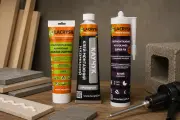
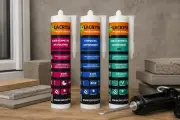
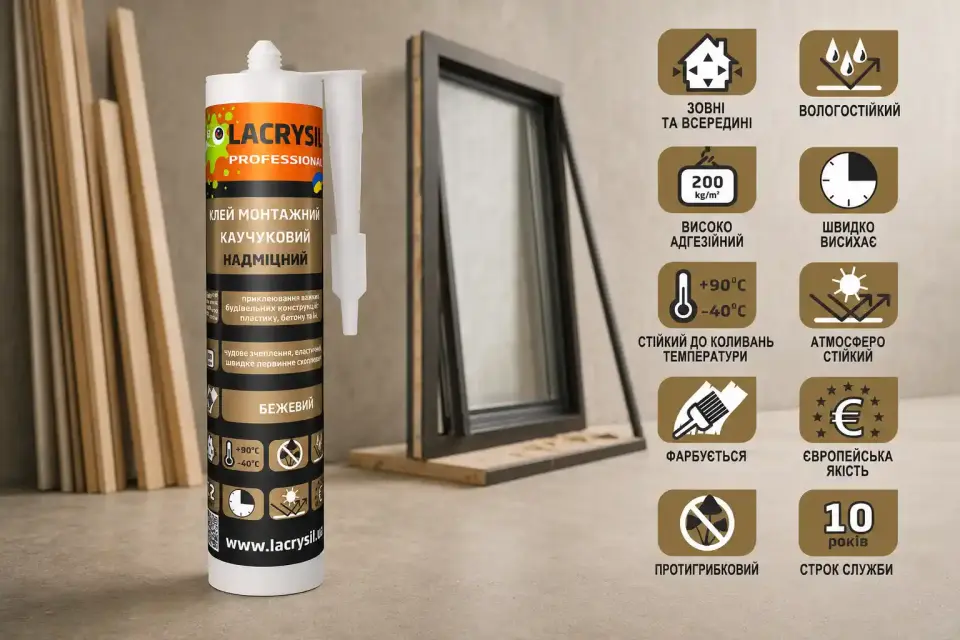
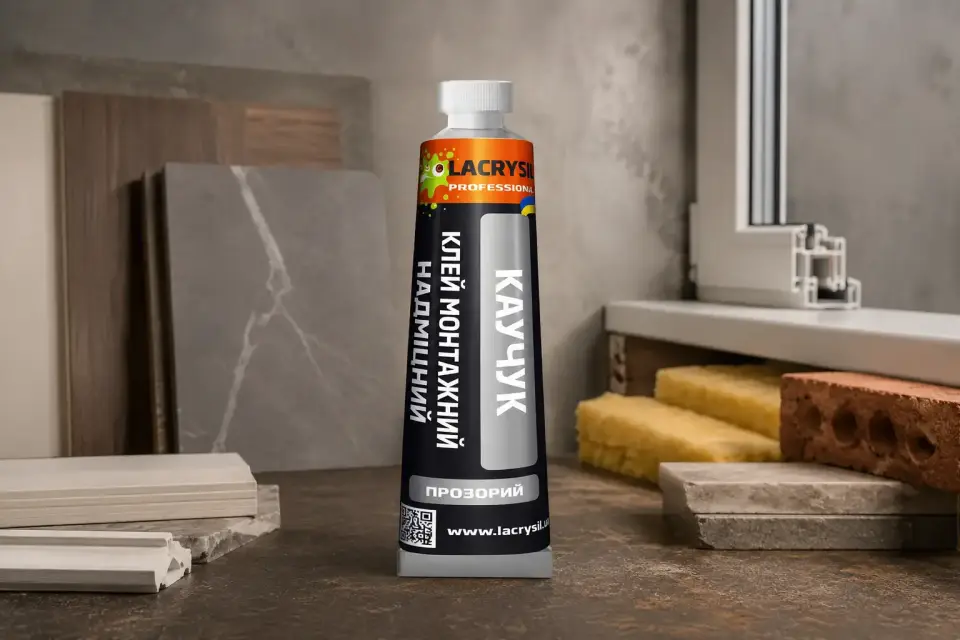
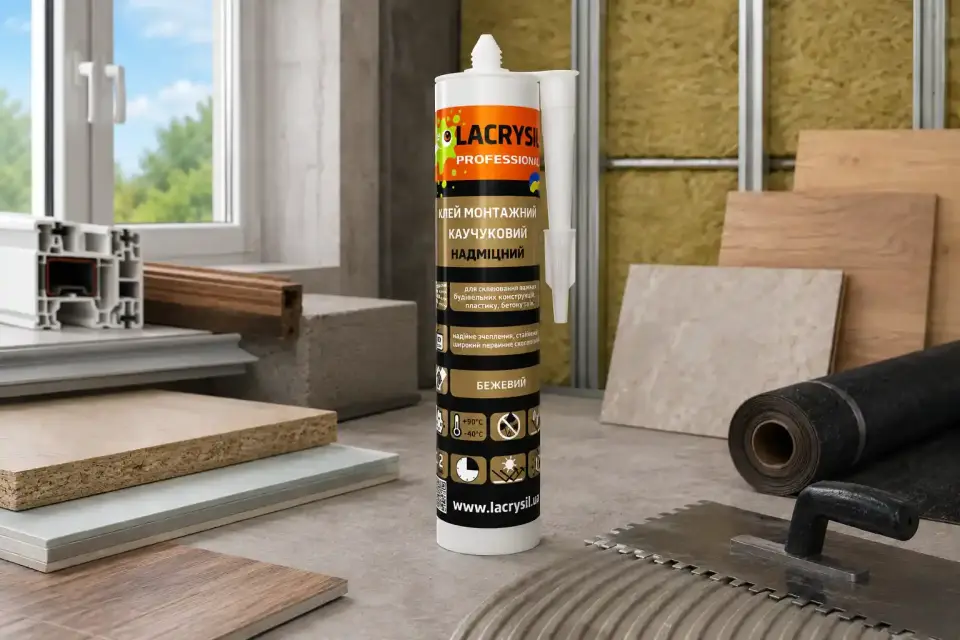
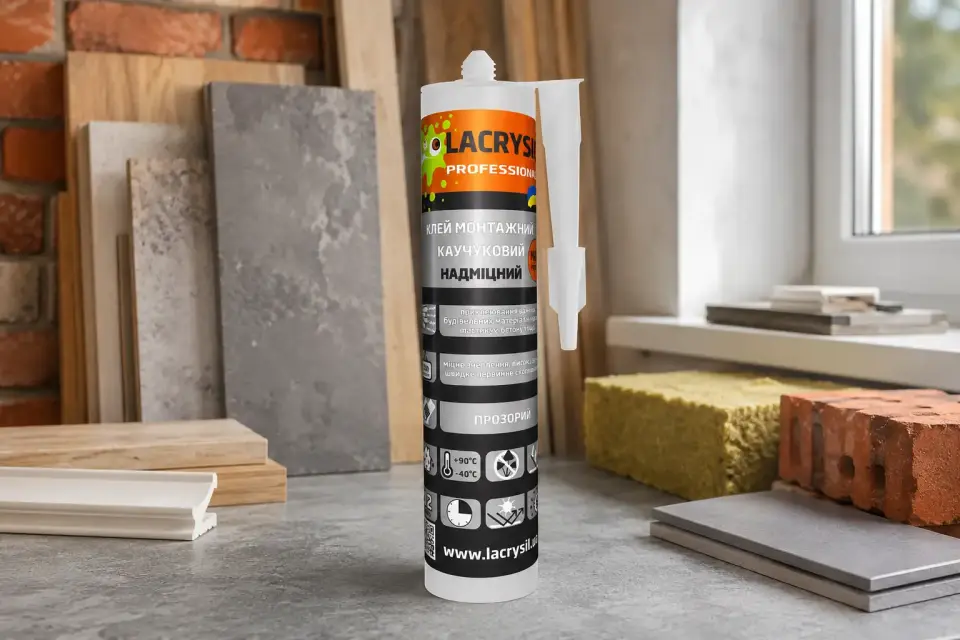
Rubber adhesive “Extra Strong”
Specifications
- Consumption:
- 0.2 - 0.5 kg/m²
- Storage term:
- 12 months
- Drying time:
- 24 - 48 hours
- Operating temperature:
- -40°C ... +90°C
- Base:
- synthetic rubbers and resins
- Application temperature:
- -10°C ... +35°C
Choose a variant
3 available
“Extra Strong” rubber adhesive is designed for long-term fixing of heavy construction and decorative finishing elements. It is useful when parts need to be fixed firmly and neatly without unnecessary mechanical fasteners.
The adhesive is used in repair, construction, and decorative finishing work when heavy elements need to be fixed reliably to a prepared substrate. Specific use cases are listed below.
Before application, contact surfaces must be dry, solid, level, and cleaned of dust, dirt, rust, ice, mold, grease stains, old coatings, and loose particles. For porous or weakened substrates, the manufacturer recommends pre-treating with Lacrysil 1:10 primer concentrate solution and drying.
Apply the adhesive in strips or spots to one contact surface without spreading it as a continuous layer. After the first press, separate the surfaces, keep them open for about 5 minutes, join again, press firmly, and fix the element until the adhesive sets.
Initial setting time at room conditions is about 10 minutes. Final adhesive seam formation takes 24-48 hours and depends on the substrate, application method, and ambient conditions.
- suitable for fixing heavy construction and decorative elements;
- helps install panels, window sills, furniture elements, window and door units;
- convenient for spot or strip application;
- can be used indoors and outdoors when conditions follow the manufacturer recommendations;
- compatible with various construction substrates;
- helps create a neat joint without visible mechanical fasteners.
- wall panel installation;
- window sill installation;
- fixing furniture elements;
- window and door unit installation;
- exterior cladding board fixing;
- flooring and roofing systems;
- thermal insulation material installation;
- decorative finishing work.
| Material / Base | Concrete, brick, gypsum, plasterboard | Stone, granite, marble | Glass | Wood, chipboard, fiberboard, MDF, plywood | Tile, ceramic, porcelain | Ferrous and galvanized metal, stainless steel | Rubber, PVC | Aluminum, copper and their alloys |
|---|---|---|---|---|---|---|---|---|
| Concrete, brick, gypsum, plasterboard | ||||||||
| Stone, granite, marble | ||||||||
| Glass | ||||||||
| Wood, chipboard, MDF, fiberboard, plywood | ||||||||
| Tile, ceramic, porcelain | ||||||||
| Ferrous and galvanized metal, stainless steel | ||||||||
| Rubber, PVC | ||||||||
| Aluminum, copper and their alloys | ||||||||
| Tile roofing, slate, tinplate |
What is it suitable for?
Rubber mounting adhesive for fixing heavy construction and decorative elements. Suitable for panels, window sills, furniture elements, window and door units, thermal insulation, and various construction substrates.When is it not suitable?
Do not use as a replacement for mechanical fixing where the element manufacturer requires anchors or dowels; do not bond over dust, grease, or weak layers.What is the consumption or yield?
Product specification guide: 0.2 - 0.5 kg/m². For an exact estimate, consider area, joint size, application method, and substrate condition.How long does the layer dry or form?
Product specification guide: 24 - 48 hours. Cold, humidity, or a thick layer can increase the waiting time before loading.What are the common mistakes?
Weak substrate preparation, loading too early, uneven pressing, and choosing adhesive without considering element weight.