Save to favorites

Add to compare

PVA D3 glue

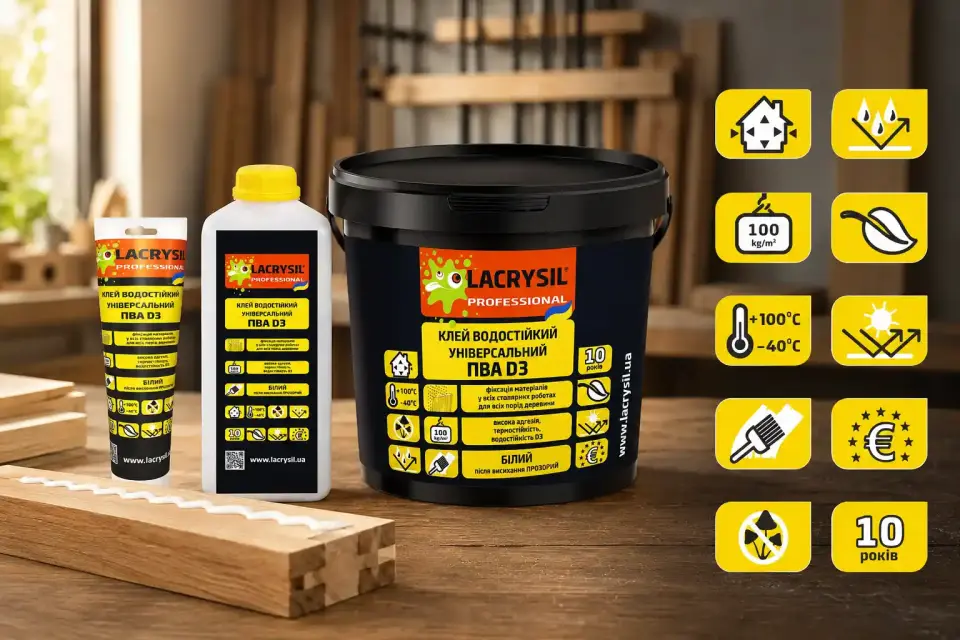
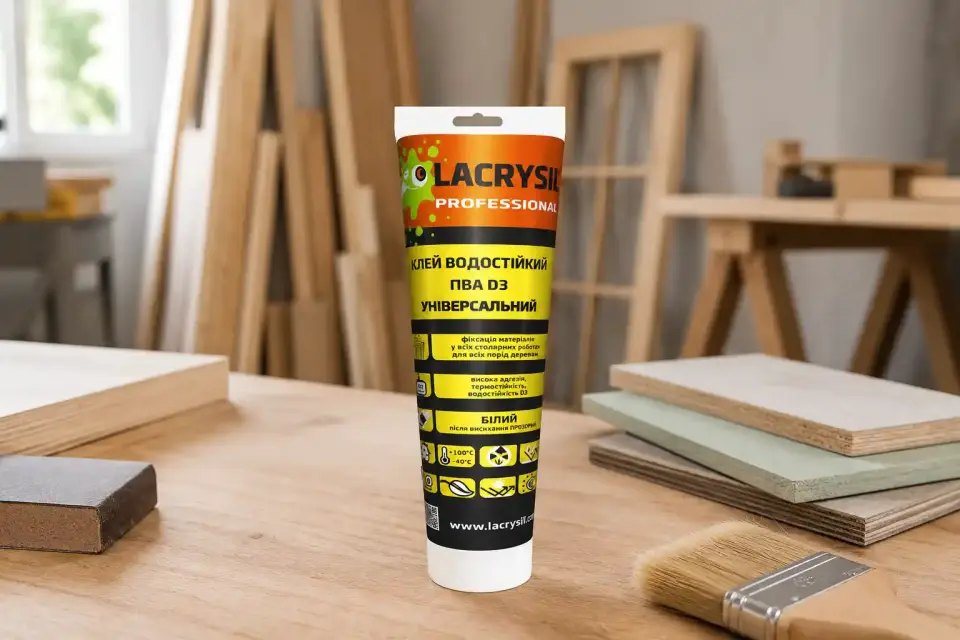
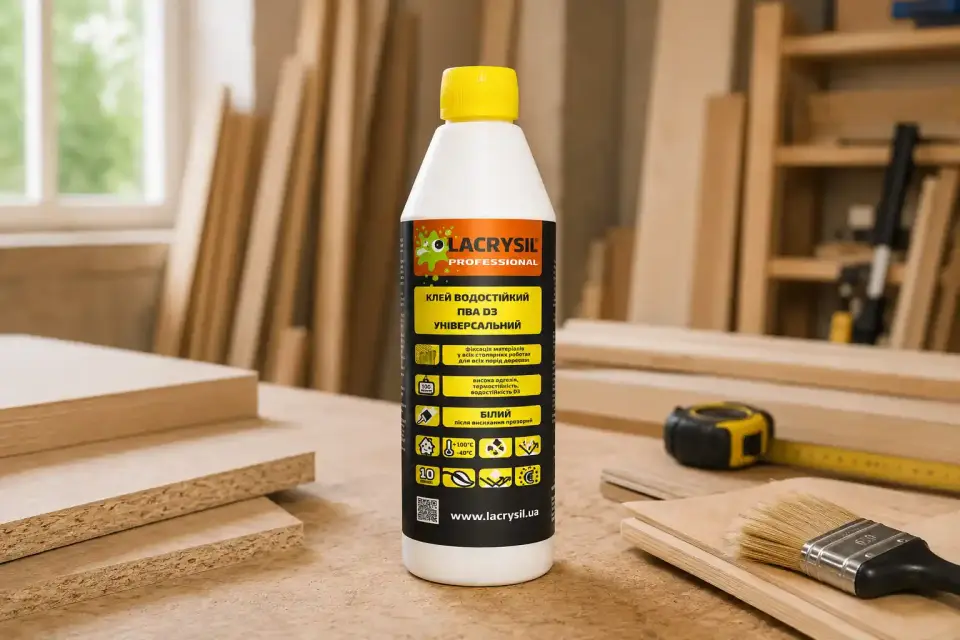
Water-resistant PVA D3 glue for interior work, bonding wood, plywood, veneer, floor coverings, wallpaper, and other finishing materials.

Specifications

Consumption:
0.15 - 0.2 kg/m²
Storage term:
12 months
Drying time:
24 hours
Operating temperature:
-40°C ... +100°C
Base:
polyvinyl acetate
Application temperature:
+18°C ... +35°C

Choose a variant

5 available

Description

PVA D3 glue is designed for interior work where strong and neat bonding of finishing materials, wood, and wood-based materials is needed.

The glue is used for bonding products made of different wood species, plywood, and veneer by hot or cold methods. It is also suitable for fixing linoleum flooring, carpet on woven and non-woven bases, boards and products based on plasterboard, cellulose materials, wallpaper, glass-fiber wallpaper, leather, ceramic tile, and PVC tile.

D3 water resistance according to EN 204 allows the glue to be used in rooms with constantly increased humidity. The compound can also be used as a plasticizer and adhesive additive for cement-sand, chalk, and gypsum construction mortars.

Before application, surfaces must be dry, strong, level, and cleaned of dust, dirt, mould, grease stains, old coating residues, and particles that are poorly bonded to the substrate. Weakened areas should be treated with Lacrysil primer concentrate diluted 1:10 and dried.

Before use, mix the glue until homogeneous, apply a sufficient amount to one contact surface, join the parts, press evenly, and fix until the glue sets. Work should be carried out at +18°C ... +35°C; the result depends on the substrate, layer thickness, application uniformity, and ambient conditions.
Benefits
  • forms a D3 water-resistant adhesive joint according to EN 204;
  • suitable for bonding wood, plywood, and veneer by hot or cold methods;
  • helps fix linoleum, carpet, wallpaper, glass-fiber wallpaper, leather, and tile;
  • can be used as an adhesive additive for construction mortars;
  • becomes transparent after drying;
  • available in pack sizes for small repairs, finishing work, and larger volumes.
Where to use
  • bonding different wood species, plywood, and veneer;
  • fixing linoleum and carpet;
  • working with wallpaper, glass-fiber wallpaper, and cellulose materials;
  • bonding plasterboard, wood, and wood-based products;
  • fixing leather, ceramic tile, and PVC tile;
  • interior work in rooms with increased humidity;
  • modifying cement-sand, chalk, and gypsum mortars.
How to choose a pack size
  • 0.15 kg is convenient for small repairs, touch-ups, and spot work;
  • 0.4 kg and 0.75 kg suit small finishing tasks;
  • 2 kg is practical for work within one room or several areas;
  • 10 kg suits larger areas, regular use, or preparing construction mortars.
Compatibility table
Material / Base Concrete, brick Gypsum, plasterboard Wood, chipboard, fiberboard, MDF, plywood Polystyrene
Gypsum, plasterboard
Leather, fabric
Wallpaper, paper
Wood, chipboard, fiberboard, MDF, plywood
Tile, ceramic, porcelain
Polystyrene
FAQ: use, consumption, and common mistakes
  • What is it suitable for?
    Water-resistant PVA D3 glue for interior work, bonding wood, plywood, veneer, floor coverings, wallpaper, and other finishing materials.

  • When is it not suitable?
    Do not use as a replacement for mechanical fixing where the element manufacturer requires anchors or dowels; do not bond over dust, grease, or weak layers.

  • What is the consumption or yield?
    Product specification guide: 0.15 - 0.2 kg/m². For an exact estimate, consider area, joint size, application method, and substrate condition.

  • How long does the layer dry or form?
    Product specification guide: 24 hours. Cold, humidity, or a thick layer can increase the waiting time before loading.

  • What are the common mistakes?
    Weak substrate preparation, loading too early, uneven pressing, and choosing adhesive without considering element weight.

Video
Reviews (0)