Save to favorites

Add to compare

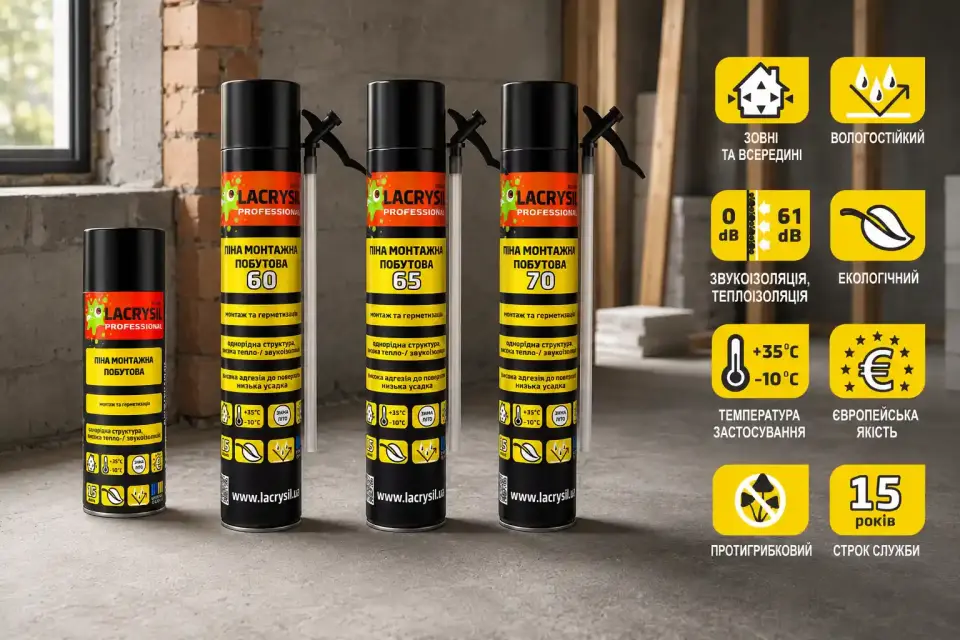
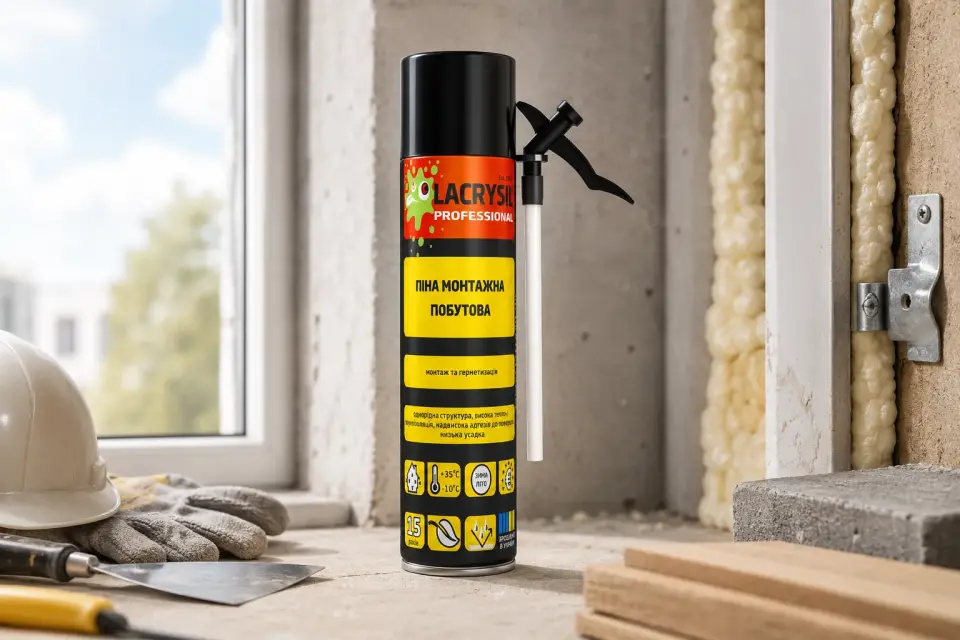
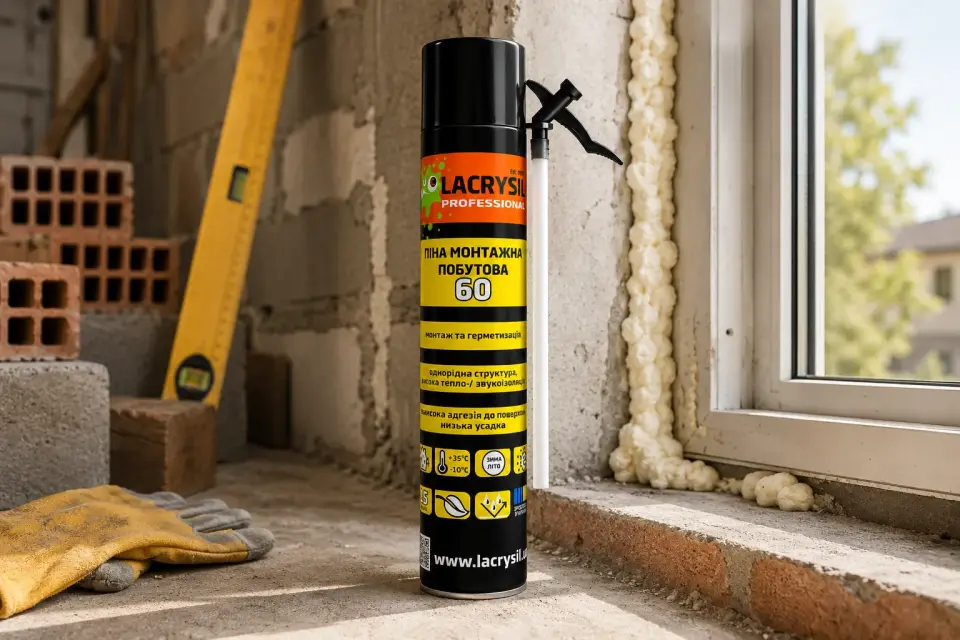
Household polyurethane mounting foam

Household polyurethane mounting foam for installing and sealing door and window blocks, filling cracks, gaps, cavities, and openings.

Specifications

Curing time:
0.5 - 12 hours
Full polymerization time:
12 - 48 hours*
Storage term:
18 months
Tack-free time:
5 - 30 minutes**
Cylinder temperature:
+15°C ... +30°C
Secondary expansion:
200 - 400%*
Base:
foamed polyurethane composition
Application temperature:
-10°C ... +35°C

Choose a variant

4 available

Mounting foam calculator

Cylinder output: 30 l / 60 l / 65 l / 70 l

Frequently bought together

Often added to this product

+1

Description

Household polyurethane mounting foam is intended for installing and sealing door and window blocks, filling cracks, gaps, cavities, and openings, and fixing pipes in cavities.

It is a one-component polyurethane mounting foam in aerosol packaging for use with an adapter tube. It adheres to most building surfaces, including concrete, brick, plaster, wood, and metal.

The formed foam is resistant to aging, atmospheric effects, moisture, mold, fungi, and insects. After curing, the joint requires protection from UV radiation; the surface should be painted or plastered.

Use the foam at ambient temperature from -10°C to +35°C and relative air humidity of at least 70%. For stable yield and physical-mechanical properties, keep the can at +18°C ... +30°C for at least 24 hours before work, then shake thoroughly for at least 1 minute immediately before application.

Working surfaces should be cleaned from dust, dirt, grease, ice, frost, and other deposits. At positive temperatures, moisten the surfaces before applying foam. Use the can upside down and shake it periodically during work.

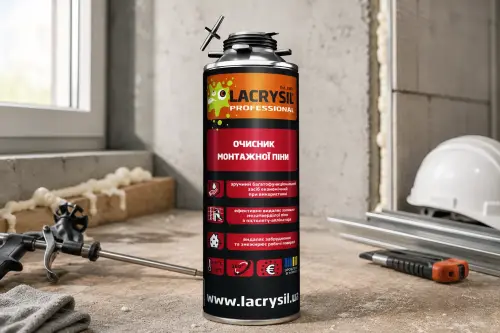
Fill the working space from bottom to top to approximately 2/3 of its volume. Cavities deeper than 4 cm and wider than 6 cm should be filled in layers: apply the next layer after the previous one becomes tack-free and is separately moistened. Remove uncured foam with TM Lacrysil cleaner, avoiding cleaner contact with polystyrene foam.

Benefits
  • suitable for household installation and repair work;
  • used with an adapter tube without an applicator gun;
  • helps install and seal door and window blocks;
  • fills cracks, gaps, cavities, and openings;
  • adheres to concrete, brick, plaster, wood, and metal;
  • available in beige packaging variants of 320 ml, 750 ml, 800 ml, and 850 ml.
Where to use
  • installation of door and window blocks;
  • sealing installation joints;
  • filling cracks, gaps, cavities, and openings;
  • fixing pipes in cavities;
  • work on concrete, brick, plaster, wood, and metal;
  • household repair work indoors and outdoors when conditions follow the manufacturer recommendations.
How to choose a variant
  • 320 ml is convenient for local repair or a small number of joints;
  • 750 ml suits typical household installation work;
  • 800 ml is useful when a larger foam reserve is needed;
  • 850 ml is appropriate for larger filling of cavities and openings.
How to use
  • keep the can at +18°C ... +30°C for at least 24 hours and shake for at least 1 minute before application;
  • clean surfaces from dust, dirt, grease, ice, frost, and other deposits;
  • at positive temperatures, moisten surfaces before application;
  • work with the can upside down and shake it periodically during application;
  • fill the space from bottom to top to about 2/3 of its volume, and fill large cavities in layers;
  • protect cured foam from UV radiation by painting or plastering, and remove uncured foam with TM Lacrysil cleaner.
FAQ: use, consumption, and common mistakes
  • What is it suitable for?
    Household polyurethane mounting foam for installing and sealing door and window blocks, filling cracks, gaps, cavities, and openings.

  • When is it not suitable?
    Do not leave the formed PU joint exposed to UV; do not use it as a load-bearing structure or a replacement for proper fixing.

  • What is the consumption or yield?
    No separate consumption value is listed, so estimate from area, joint size, or recommendations for the specific application method.

  • How long does the layer dry or form?
    Product specification guide: 0.5 - 12 hours. Cold, humidity, or a thick layer can increase the waiting time before loading.

  • What are the common mistakes?
    Cold can, wrong working position, overfilling, missing moisture when instructions require it, and an unprotected joint in sunlight.

Video
Reviews (0)