Save to favorites
Add to compare
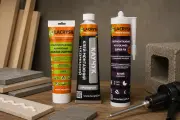
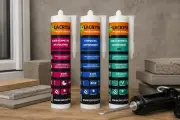
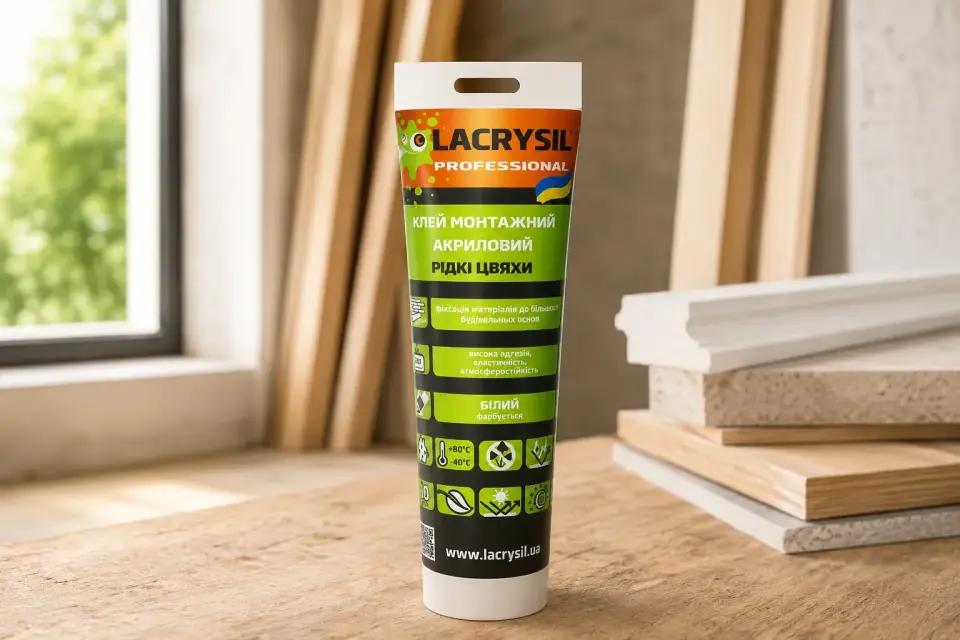
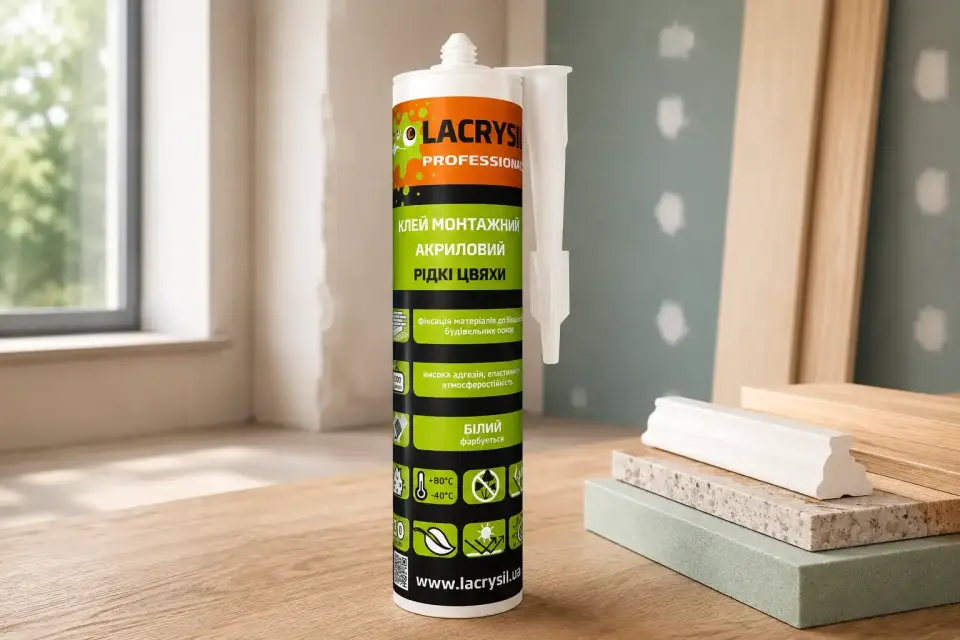
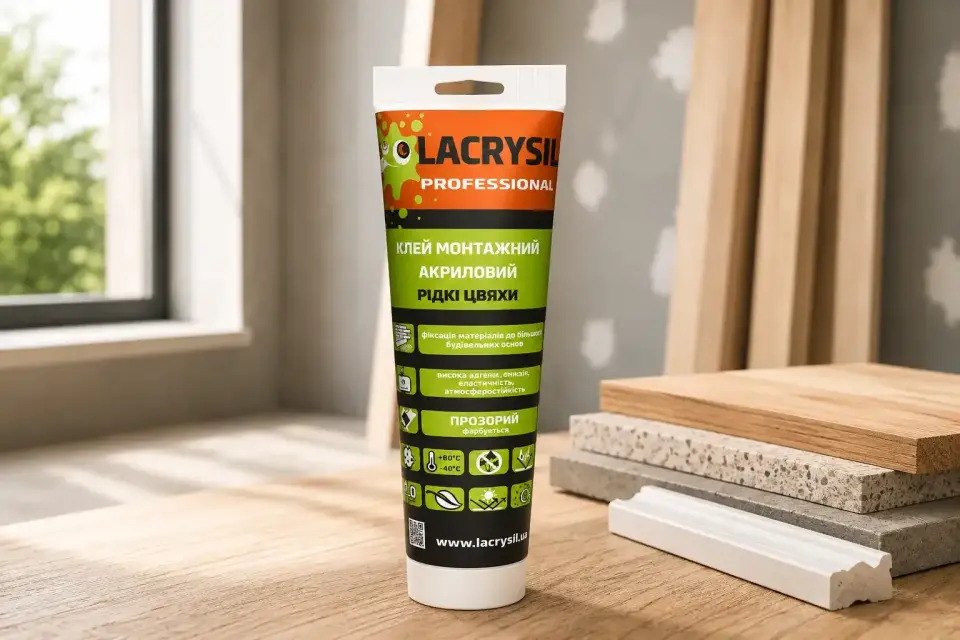
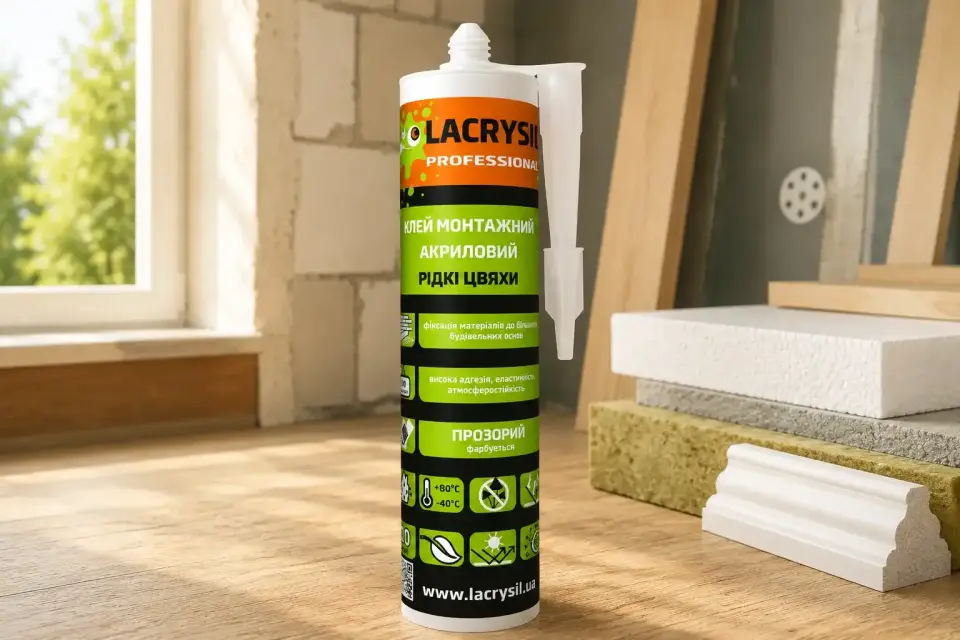
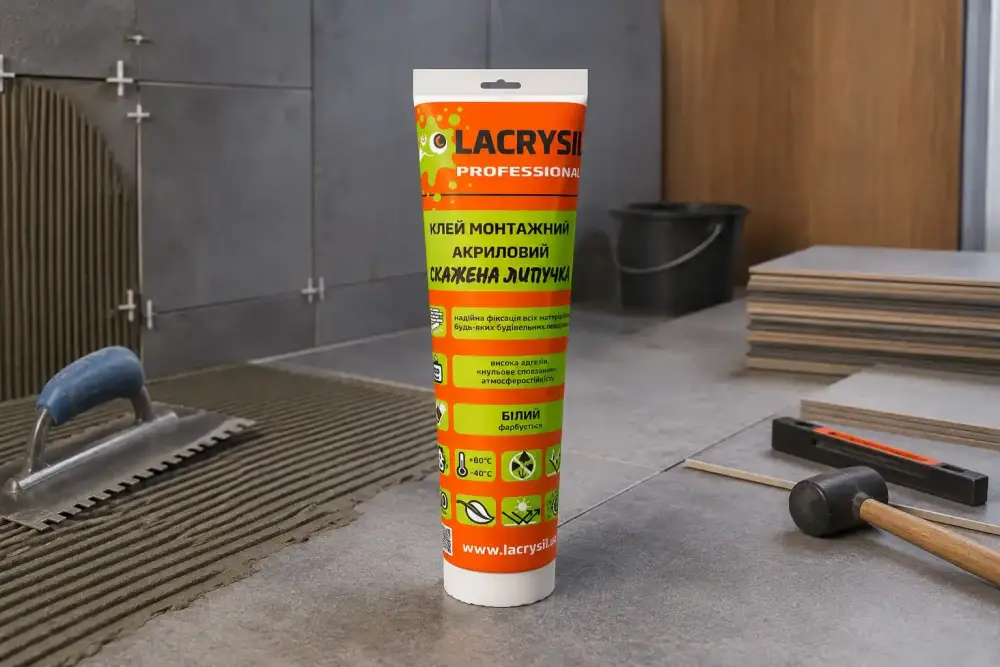
Acrylic adhesive “Liquid Nails”
Highly elastic acrylic adhesive for interior and exterior repair and mounting work, fixing wood, cork, ceramic, and polystyrene decorative elements.
Specifications
- Consumption:
- 0.25 - 1 kg/m²
- Storage term:
- 18 months
- Drying time:
- 24 - 48 hours
- Operating temperature:
- -40°C ... +80°C
- Base:
- copolymer-acrylate
- Application temperature:
- +5°C ... +35°C
Choose a variant
4 available
Description
Video
Reviews (0)
Acrylic adhesive “Liquid Nails” is designed for exterior and interior repair and mounting work when a construction or decorative element needs to be fixed firmly without unnecessary mechanical fastening.
The copolymer-acrylate adhesive is suitable for bonding wood structures and wood-based materials, cork, ceramic, and other compatible materials to traditional construction surfaces. A separate use case is installing products and decorative elements based on polystyrene.
For fast adhesive joint formation, at least one contact surface must be water-permeable. This is important when working with smooth or non-absorbent materials: in such cases, apply the adhesive in dots and do not create a continuous layer between surfaces.
Before application, substrates must be strong, dry, level, and cleaned of dust, dirt, old paint, layers, and other contaminants. Porous substrates, including gypsum, ceramic, and natural stone, should be pre-treated with Lacrysil primer concentrate diluted 1:10 and dried.
Apply the adhesive in dots or strips to one contact surface, then press the elements firmly and evenly. Do not apply a continuous layer between non-absorbent surfaces and do not allow adhesive strips to merge during pressing. Work should be carried out at +5°C ... +35°C; drying time is 24-48 hours and depends on the substrate, layer thickness, and ambient conditions.
Benefits
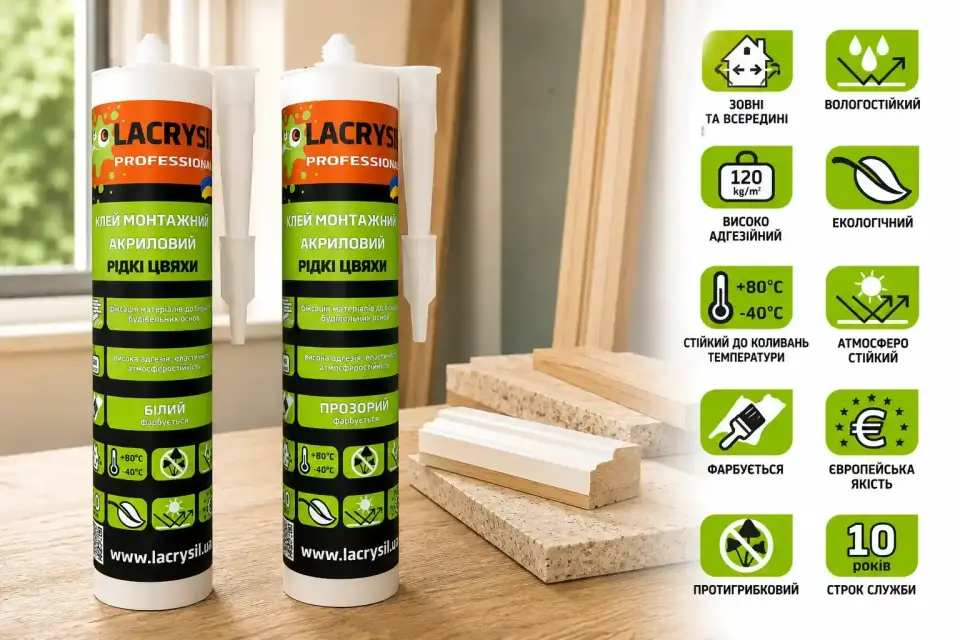
- suitable for exterior and interior repair and mounting work;
- helps fix wood, cork, ceramic, and decorative elements;
- convenient for installing polystyrene-based products;
- forms a highly elastic adhesive joint;
- can be used without visible mechanical fastening;
- available in white and transparent variants.
Where to use
- repair and mounting work indoors and outdoors;
- bonding wood and wood-based materials;
- installing cork, ceramic, and related materials;
- fixing decorative polystyrene elements;
- work with traditional construction surfaces;
- mounting where a neat joint without visible fastening is needed.
How to choose a variant
- white 0.2 kg and 0.4 kg are convenient for local repairs and small mounting tasks;
- transparent 0.15 kg suits small jobs where the joint should be less visible;
- transparent 0.28 kg is useful for a larger amount of neat joints and decorative elements;
- the white variant is appropriate where joint color is not critical or is covered by the material.
How to use
- clean the substrate from dust, dirt, old paint, layers, and other contaminants;
- treat porous substrates with Lacrysil primer concentrate diluted 1:10 and let them dry;
- make sure at least one contact surface is water-permeable;
- apply in dots or strips to one of the surfaces;
- use dot application for non-absorbent materials;
- avoid a continuous layer between non-absorbent surfaces and do not allow adhesive strips to merge.
Compatibility table
| Material / Base | Concrete, brick, gypsum, plasterboard | Stone, granite, marble | Mirror, glass | Wood, chipboard, fiberboard, MDF, plywood | Tile, ceramic, porcelain | Primed metal | Plastic, PVC | Polystyrene |
|---|---|---|---|---|---|---|---|---|
| Concrete, brick, gypsum, plasterboard | ||||||||
| Stone, granite, marble | ||||||||
| Mirror, glass | - | - | - | |||||
| Wood, chipboard, MDF, fiberboard, plywood | ||||||||
| Tile, ceramic, porcelain | - | |||||||
| Primed metal | ||||||||
| Plastic, PVC | - | - | - | |||||
| Polystyrene |
FAQ: use, consumption, and common mistakes
What is it suitable for?
Highly elastic acrylic adhesive for interior and exterior repair and mounting work, fixing wood, cork, ceramic, and polystyrene decorative elements.When is it not suitable?
Do not use as a replacement for mechanical fixing where the element manufacturer requires anchors or dowels; do not bond over dust, grease, or weak layers.What is the consumption or yield?
Product specification guide: 0.25 - 1 kg/m². For an exact estimate, consider area, joint size, application method, and substrate condition.How long does the layer dry or form?
Product specification guide: 24 - 48 hours. Cold, humidity, or a thick layer can increase the waiting time before loading.What are the common mistakes?
Weak substrate preparation, loading too early, uneven pressing, and choosing adhesive without considering element weight.
Similar products
1 similar products