TOP
We use necessary cookies for the cart, session, and security. Analytics and marketing cookies are enabled only after your choice. Learn more
Lacrysil App
Add the store to your home screen or desktop for faster access and an app-like full-screen experience.
Catalog
Popular categories
Search
Start typing to see suggestions.
Save to favorites
Add to compare
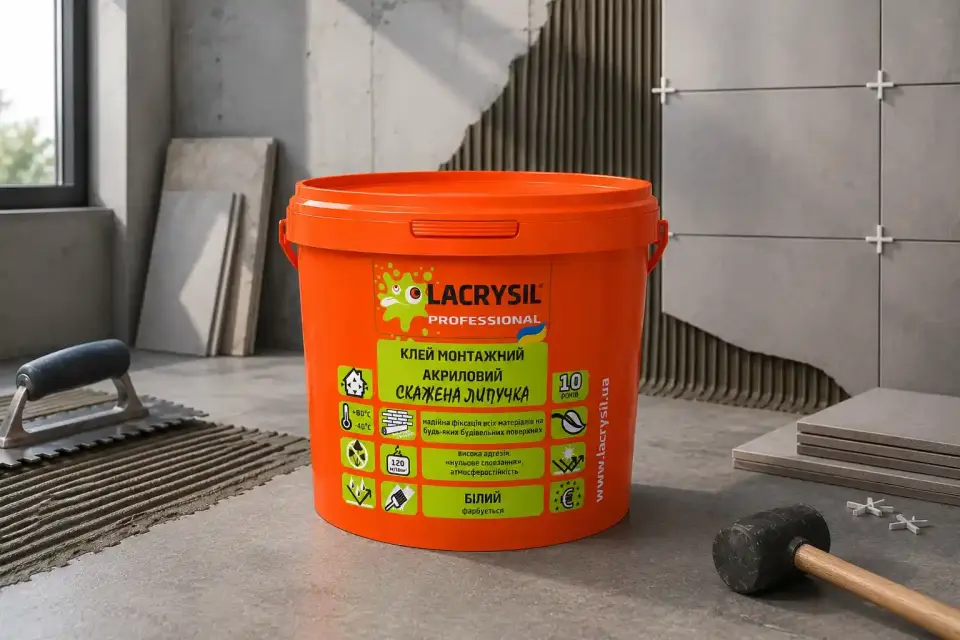
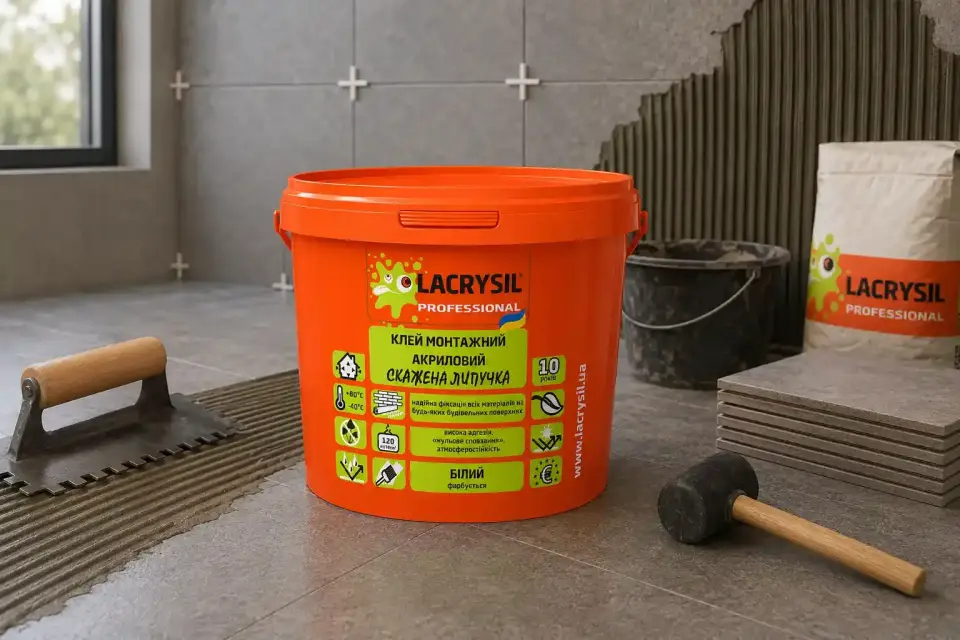
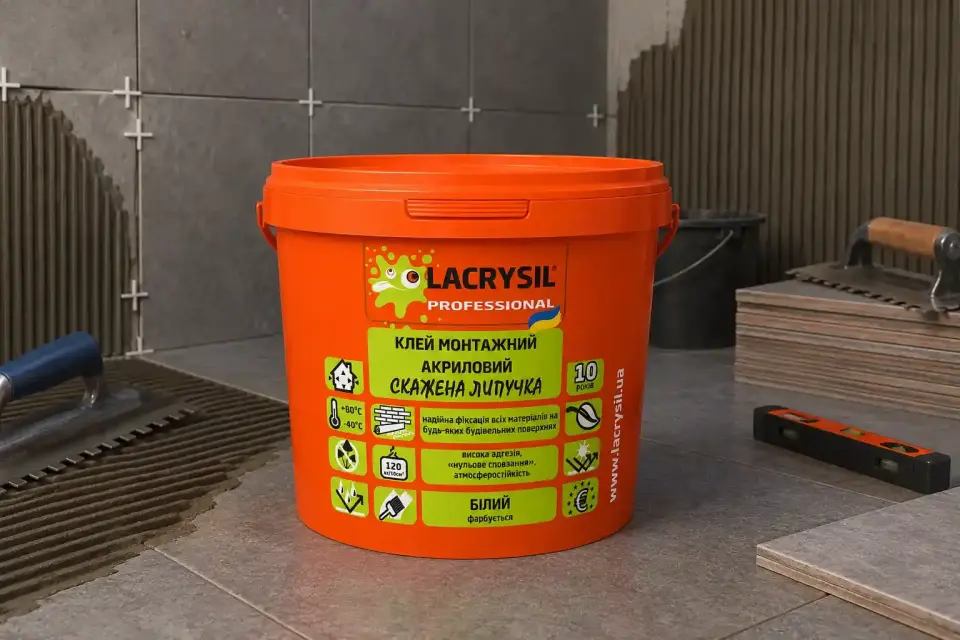
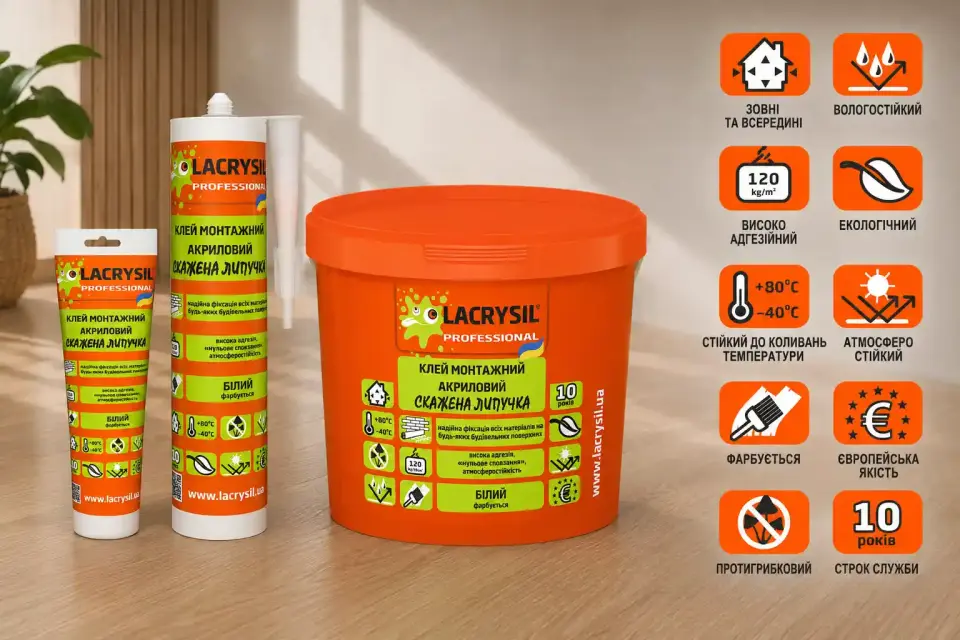
Water-resistant acrylic construction adhesive for installing wall and floor coverings with a “zero slip” effect.
6 available
Acrylic adhesive “Crazy Sticky” is designed for installing wall and floor covering systems when a material needs to be fixed quickly to a prepared substrate without slipping.
The adhesive has an acrylic base, provides strong adhesion to most construction materials, and forms a durable water-resistant adhesive joint after drying. The compound helps compensate for deformation stress and is used where stable fixing of facing or decorative elements is important.
The product is suitable for concrete, brick, gypsum, plasterboard, stone, granite, marble, wood, chipboard, fiberboard, MDF, plywood, tile, ceramic, porcelain, primed metal, polystyrene, and other compatible materials. For some smooth or non-porous surfaces, check the compatibility table below before use.
Before application, surfaces must be dry, strong, level, and cleaned of dust, dirt, grease, old paint, loose particles, and other substances that may weaken adhesion. At least one contact surface must be porous. Porous substrates should be pre-treated with Lacrysil primer concentrate diluted 1:10 and dried.
Apply the adhesive in dots or strips to one contact surface, then press the material firmly and evenly. Do not allow adhesive strips to merge during pressing. Work should be carried out at +5°C ... +35°C; drying time is 24-48 hours and depends on the substrate, layer thickness, and ambient conditions.
| Material / Base | Concrete, brick, gypsum, plasterboard | Stone, granite, marble | Wood, chipboard, fiberboard, MDF, plywood | Tile, ceramic, porcelain | Primed metal | Polystyrene |
|---|---|---|---|---|---|---|
| Concrete, brick, gypsum, plasterboard | ||||||
| Stone, granite, marble | ||||||
| Mirror, glass | - | |||||
| Wood, chipboard, MDF, fiberboard, plywood | ||||||
| Tile, ceramic, porcelain | ||||||
| Primed metal | ||||||
| Plastic, PVC | - | |||||
| Polystyrene |
What is it suitable for?
Water-resistant acrylic construction adhesive for installing wall and floor coverings with a “zero slip” effect.
When is it not suitable?
Do not use as a replacement for mechanical fixing where the element manufacturer requires anchors or dowels; do not bond over dust, grease, or weak layers.
What is the consumption or yield?
Product specification guide: 0.25 - 1 kg/m². For an exact estimate, consider area, joint size, application method, and substrate condition.
How long does the layer dry or form?
Product specification guide: 24 - 48 hours. Cold, humidity, or a thick layer can increase the waiting time before loading.
What are the common mistakes?
Weak substrate preparation, loading too early, uneven pressing, and choosing adhesive without considering element weight.
1 similar products