


The Perfect Concrete Garage Floor: How to Get Rid of Dust and Cracks
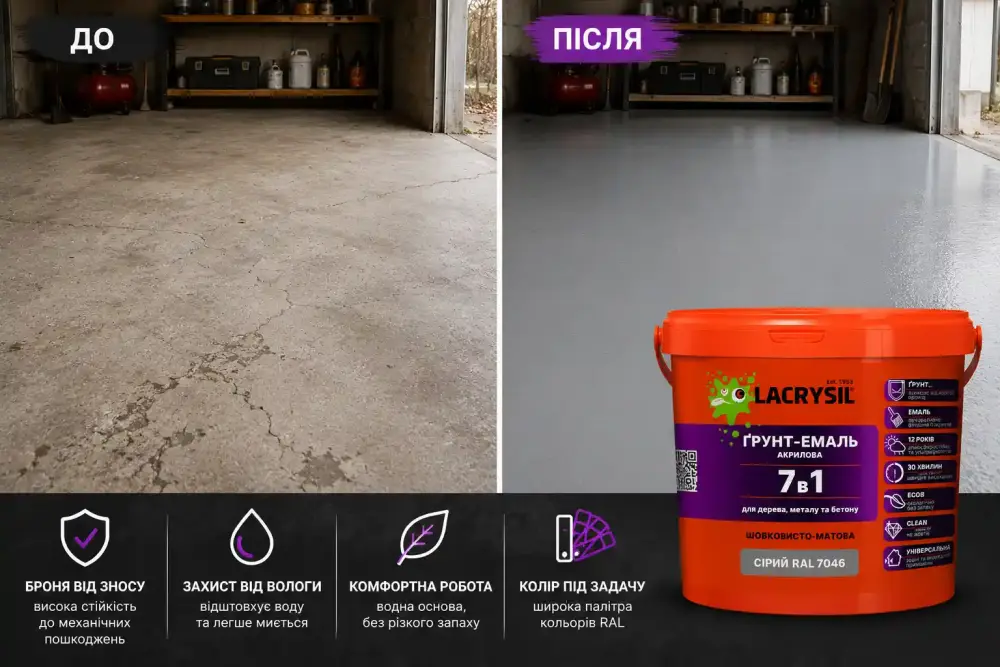
A concrete floor in a garage or workshop constantly produces dust, absorbs dirt, and wears under wheels. This kind of load requires a strong protective coating.
We use necessary cookies for the cart, session, and security. Analytics and marketing cookies are enabled only after your choice. Learn more
Lacrysil App
Add the store to your home screen or desktop for faster access and an app-like full-screen experience.
Search
Start typing to see suggestions.
Blog
Choose a category, tags, and sorting to quickly find the right article.
Page 1 of 1
A concrete floor in a garage or workshop constantly produces dust, absorbs dirt, and wears under wheels. This kind of load requires a strong protective coating.
Children’s handprints in the hallway, grease in the kitchen, and humid steam in the bathroom are a serious test for walls. These areas need paint that can be washed often.
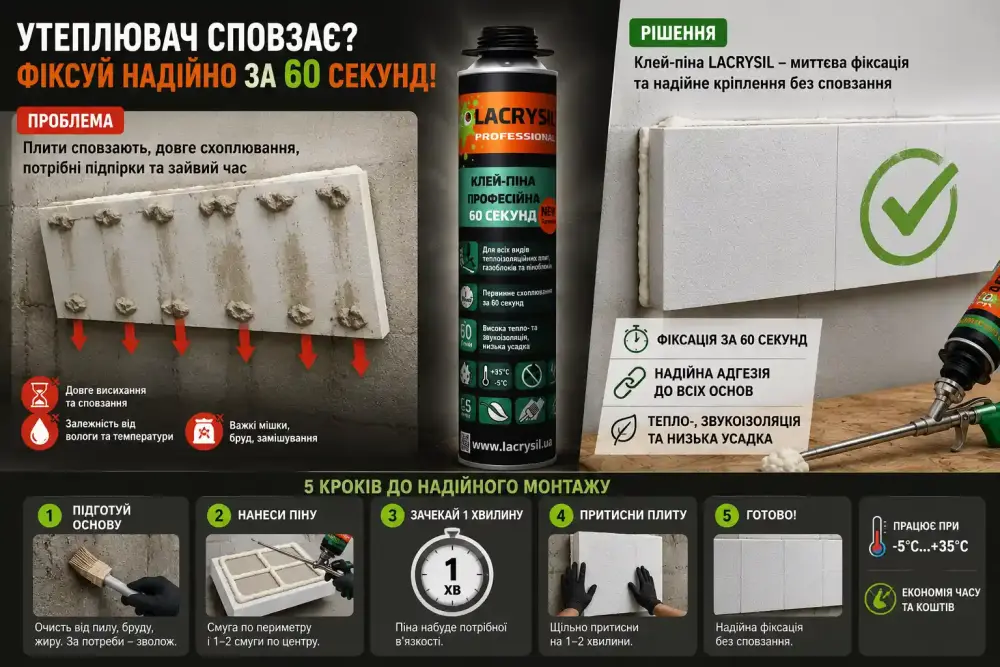
It’s a familiar scenario: you apply the adhesive, press the panel or expanded polystyrene against the wall, and the material slowly slides down. You have to look for props, hold the board with your hands, or redo the work. Let's break down why this happens, what the main disadvantages of traditional mixtures are, and how to solve the problem using professional adhesive foam.
0 items