Save to favorites
Add to compare
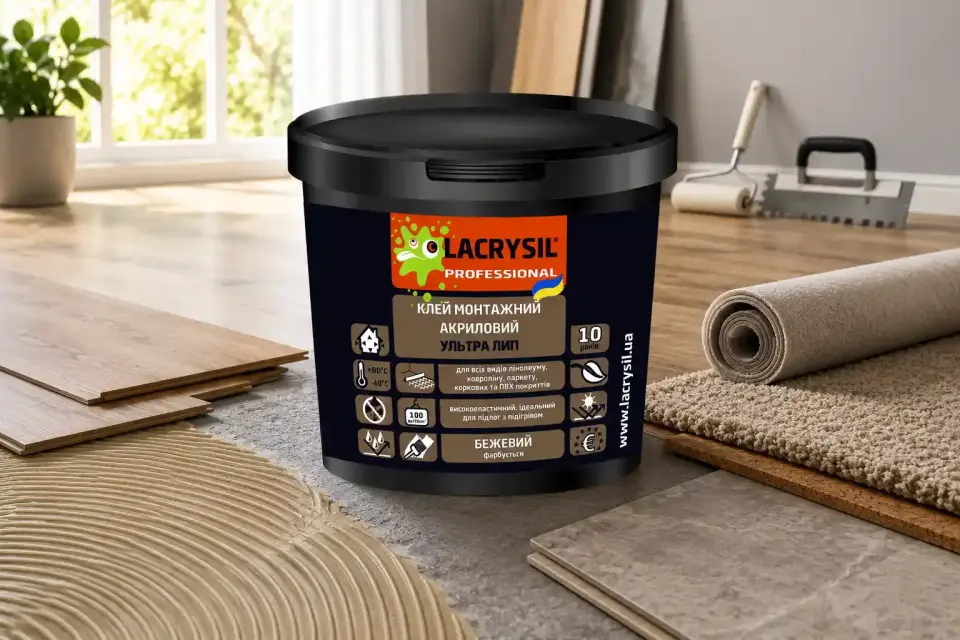
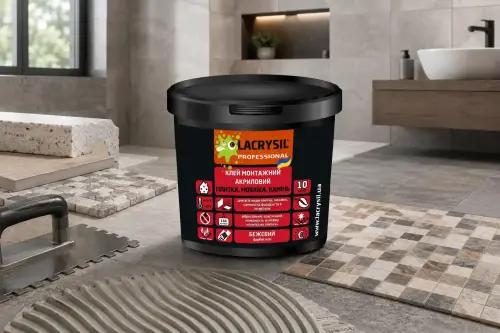
Acrylic adhesive “Ultra Lip”
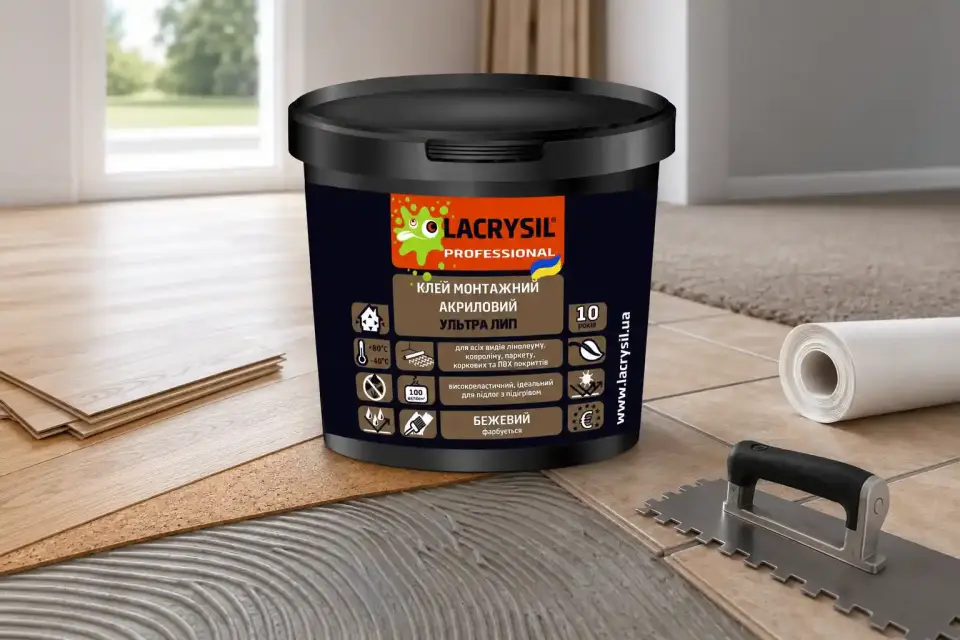
Ready-to-use acrylic adhesive for installing flooring systems: linoleum, carpet, parquet, laminate, ceramic tile, and wood-based materials.
Specifications
- Consumption:
- 0.25 - 0.2 kg/m²
- Storage term:
- 18 months
- Drying time:
- 24 - 48 hours
- Operating temperature:
- -40°C ... +80°C
- Base:
- copolymer-acrylate
- Application temperature:
- +5°C ... +35°C
Choose a variant
4 available
Acrylic adhesive “Ultra Lip” is designed for installing flooring systems during interior and exterior repair and construction work.
The adhesive is used for long-term fixing of backed and non-backed linoleum, woven and nonwoven carpet, parquet, laminate, ceramic tile, and wood-based products on traditional surfaces.
After drying, the adhesive forms a water-resistant, vapor-permeable layer that can retain its user properties under temperature fluctuations. According to the manufacturer, the material is fire-safe. When using the adhesive, one contact surface must absorb moisture; under unfavorable conditions, seam formation time may increase.
Before application, working surfaces must be dry, strong, level, and cleaned of dust, dirt, grease, old paint, loose particles, and other contaminants. Porous substrates should be pre-treated with Lacrysil primer concentrate diluted 1:10 and dried. The material to be bonded should be kept unfolded until fully straightened.
Stir the adhesive until uniform, apply a sufficient amount to the contact surface of the substrate, and spread it evenly. After joining the surfaces, press and fix the material firmly and evenly. Initial setting time is about 15 minutes, during which the material can be adjusted on the substrate surface. Do not mix with other adhesive types.
- designed for flooring systems;
- suitable for linoleum, carpet, parquet, and laminate;
- can be used for ceramic tile and wood-based materials;
- forms a water-resistant, vapor-permeable layer after drying;
- allows material adjustment during the initial setting time;
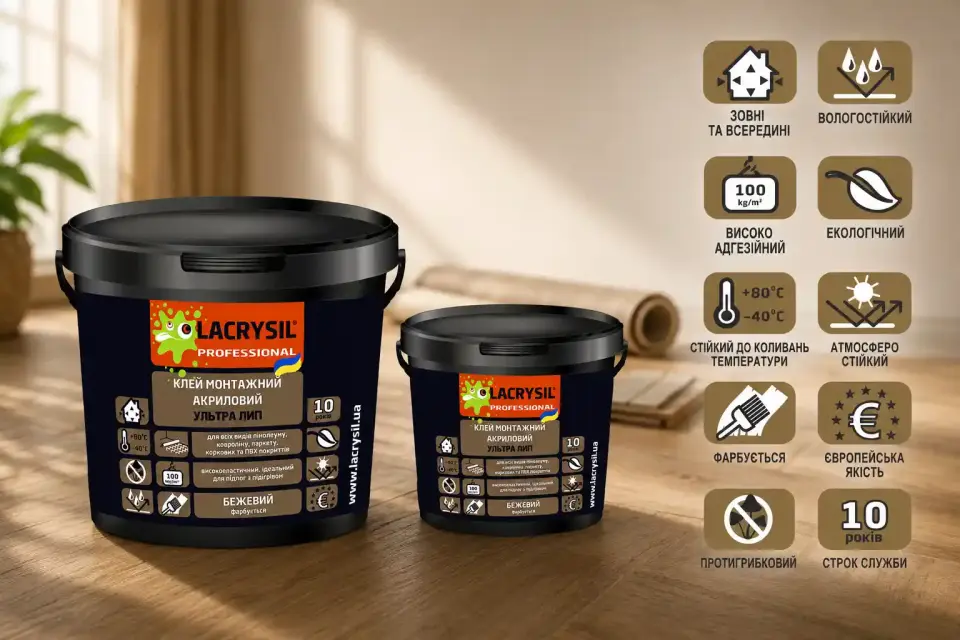
- available in beige 1.2 kg, 3 kg, 6 kg, and 12 kg pack sizes.
- installing backed and non-backed linoleum;
- fixing woven and nonwoven carpet;
- laying parquet and laminate;
- working with ceramic tile;
- installing wood, chipboard, fiberboard, MDF, and plywood products;
- interior and exterior repair and construction work on compatible substrates.
- 1.2 kg is convenient for local repair or a small covering area;
- 3 kg suits medium-sized work with linoleum, carpet, or laminate;
- 6 kg is useful for a larger area or several installation zones;
- 12 kg is appropriate for large-scale flooring installation.
- clean the substrate from dust, dirt, grease, old paint, and loose particles;
- treat porous substrates with Lacrysil primer concentrate diluted 1:10 and let them dry;
- keep the material unfolded until fully straightened;
- stir the adhesive until uniform and apply it evenly to the substrate;
- join the surfaces, press firmly, and fix;
- remember that one contact surface must absorb moisture, and adjustment is possible for about 15 minutes.
| Material / Base | Concrete, brick | Gypsum, plasterboard | Stone, granite, marble | Wood, chipboard, fiberboard, MDF, plywood |
|---|---|---|---|---|
| Linoleum | - | |||
| Parquet | ||||
| PVC coverings | ||||
| Vinyl coverings | ||||
| Carpet coverings | ||||
| Wood, chipboard, fiberboard, MDF, plywood |
What is it suitable for?
Ready-to-use acrylic adhesive for installing flooring systems: linoleum, carpet, parquet, laminate, ceramic tile, and wood-based materials.When is it not suitable?
Do not use as a replacement for mechanical fixing where the element manufacturer requires anchors or dowels; do not bond over dust, grease, or weak layers.What is the consumption or yield?
Product specification guide: 0.25 - 0.2 kg/m². For an exact estimate, consider area, joint size, application method, and substrate condition.How long does the layer dry or form?
Product specification guide: 24 - 48 hours. Cold, humidity, or a thick layer can increase the waiting time before loading.What are the common mistakes?
Weak substrate preparation, loading too early, uneven pressing, and choosing adhesive without considering element weight.
Similar products
2 similar products