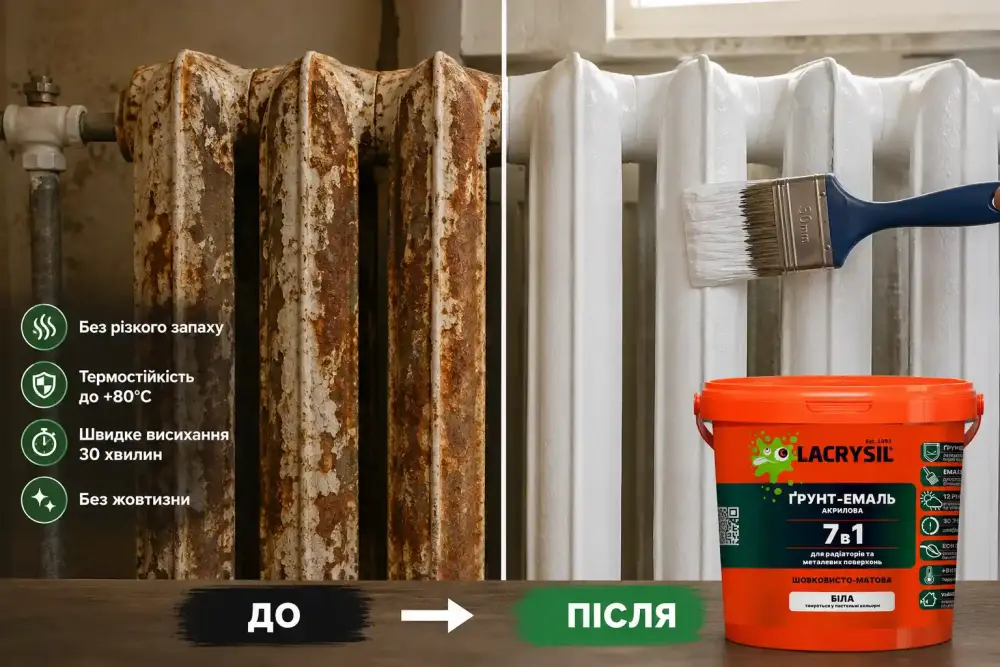
Painting Radiators Without the Headache: Odorless Radiator Enamel
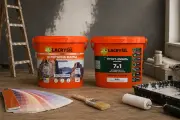
You can refresh radiators without harsh odor or long waiting times. For living rooms, it is better to choose a water-based heat-resistant enamel.
We use necessary cookies for the cart, session, and security. Analytics and marketing cookies are enabled only after your choice. Learn more
Lacrysil App
Add the store to your home screen or desktop for faster access and an app-like full-screen experience.
Search
Start typing to see suggestions.
Blog
Choose a category, tags, and sorting to quickly find the right article.
Page 1 of 1
You can refresh radiators without harsh odor or long waiting times. For living rooms, it is better to choose a water-based heat-resistant enamel.
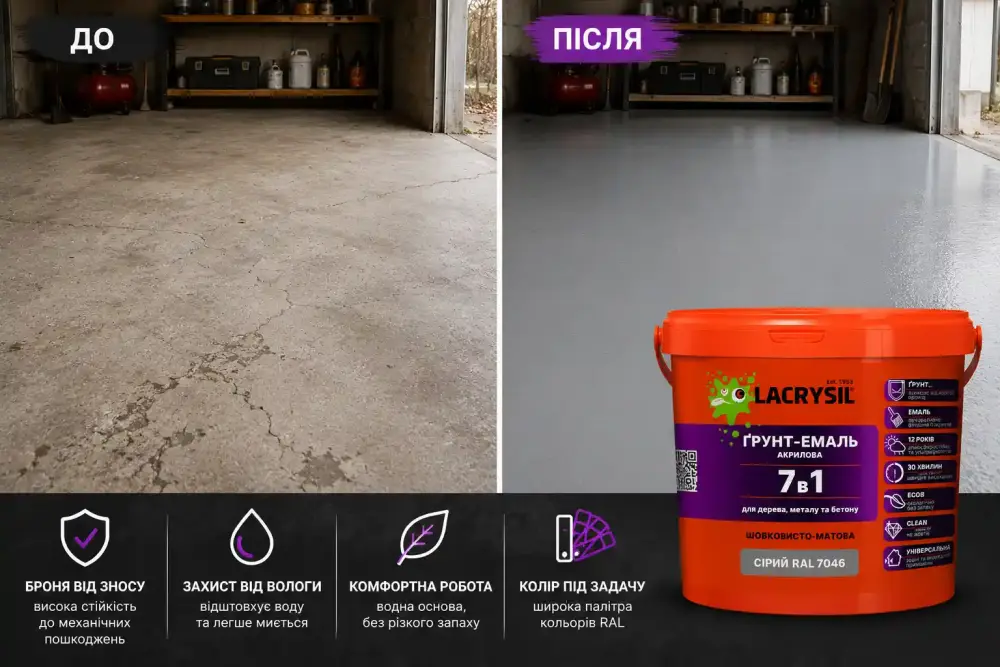
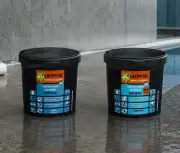
A concrete floor in a garage or workshop constantly produces dust, absorbs dirt, and wears under wheels. This kind of load requires a strong protective coating.
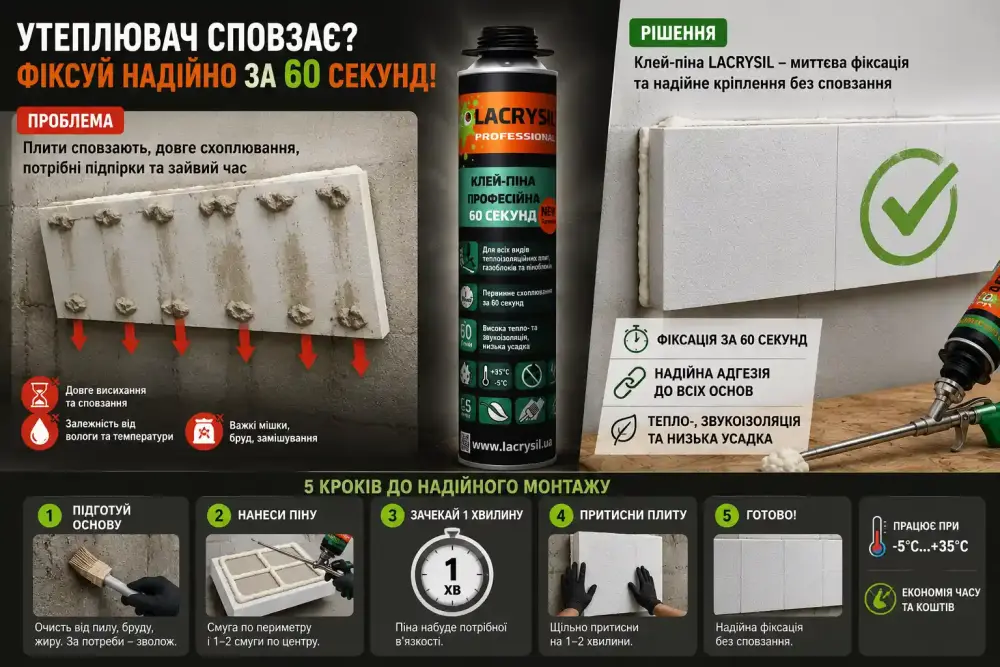
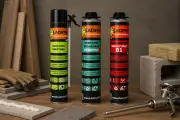
It’s a familiar scenario: you apply the adhesive, press the panel or expanded polystyrene against the wall, and the material slowly slides down. You have to look for props, hold the board with your hands, or redo the work. Let's break down why this happens, what the main disadvantages of traditional mixtures are, and how to solve the problem using professional adhesive foam.
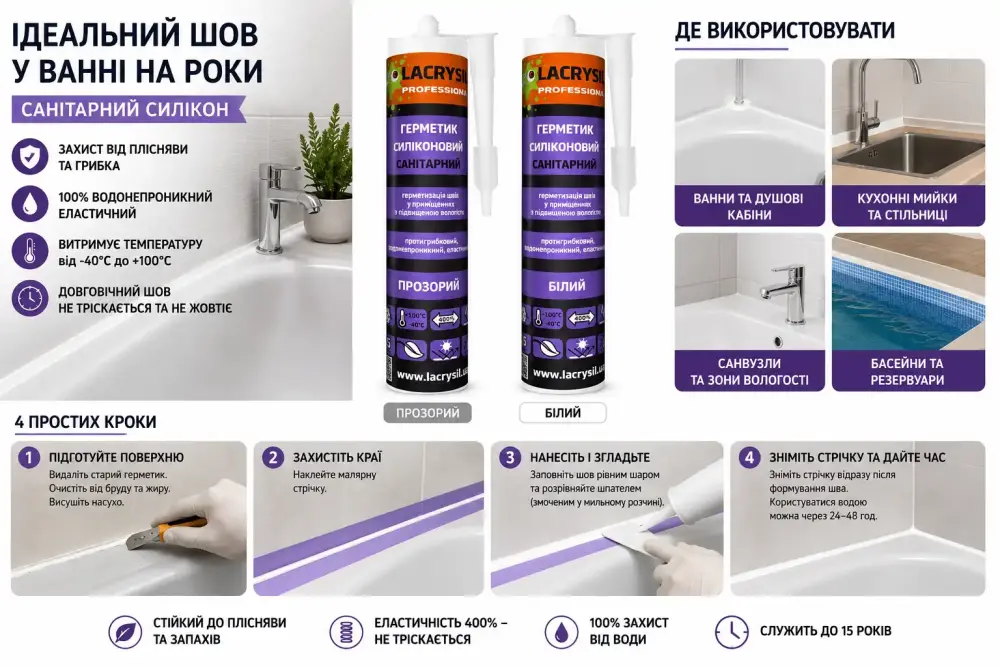
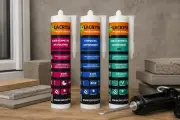
Imagine this: you have made a nice bathroom renovation, but after a few months the joint between the bathtub and the tile has darkened. Black mold has appeared, the seam has started to peel away, and after a shower water quietly runs onto the floor or, even worse, down to the neighbors below. You try to wash it off with aggressive chemicals, but the buildup keeps coming back.The problem is not your cleaning. The problem is the wrong sealant or an old one. In areas where water constantly pours and steam lingers, ordinary construction fillers do not work. You need a specialized sanitary silicone — an elastic material with powerful antifungal additives that reliably seals the joint.
0 items