Save to favorites

Add to compare

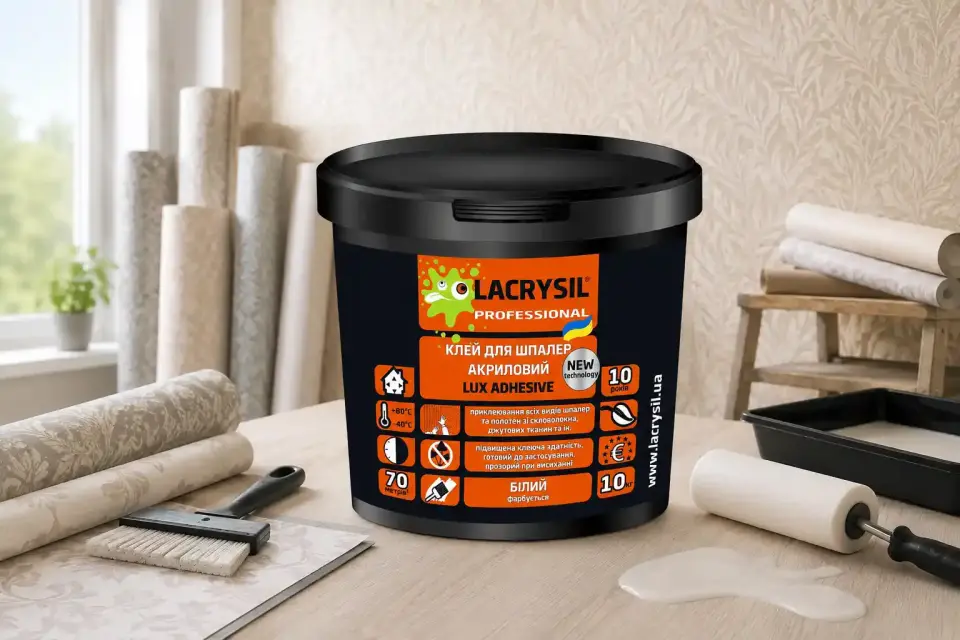
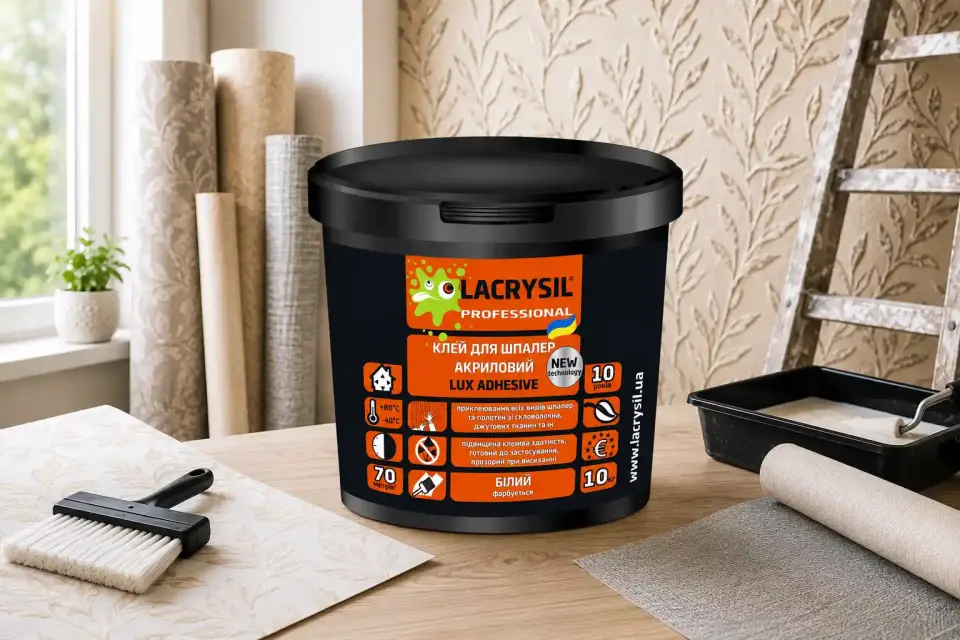
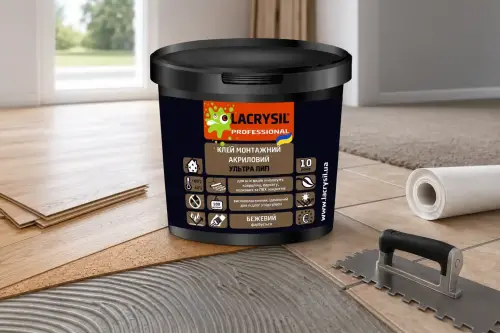
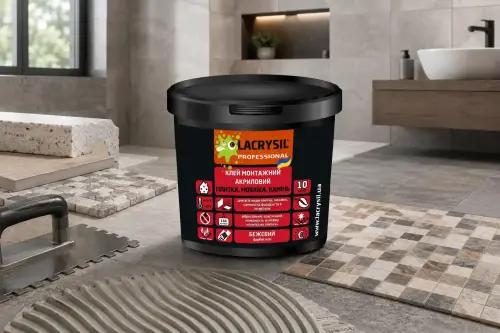
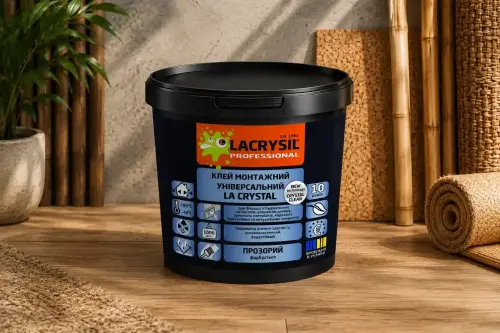
Acrylic adhesive “Lux Adhesive”

Acrylic adhesive for installing fiberglass, vinyl, textile, textured, and heavy wallpapers on traditional construction substrates.

Specifications

Consumption:
0.14 - 0.3 kg/m²
Storage term:
18 months
Drying time:
24 hours
Operating temperature:
-40°C ... +80°C
Base:
copolymer-acrylate
Application temperature:
+5°C ... +35°C

Choose a variant

3 available

Description

Acrylic adhesive “Lux Adhesive” is intended for wallpaper installation when long-term fixing on a prepared construction substrate is required.

The adhesive is used for fiberglass wallpapers and sheets, heavy wallpapers with textile or vinyl coating on paper, nonwoven, or polyester bases, as well as embossed, textured, and tufted wallpapers and jute fabrics.

It is suitable for traditional substrates such as concrete, aerated concrete, brick, plasterboard, plaster, wood, and wood-based products. Before application, surfaces must be dry, strong, level, and free from dust, dirt, mold, grease stains, remnants of old coatings and paint, other contaminants, and particles that are poorly bonded to the substrate.

Substrates with signs of deterioration or porous structure should be pre-treated with TM Lacrysil primer concentrate diluted 1:10 and dried.

Before use, stir the adhesive until uniform, apply a sufficient amount to one contact surface, and distribute evenly. After joining, press the surfaces firmly and evenly and fix until the adhesive sets for approximately 10-15 minutes.

Remove excess fresh adhesive with damp material. Adhesive seam formation usually takes 4-8 hours, but under unfavorable conditions it may increase to 24 hours. Wallpaper can be painted no earlier than one day after bonding.
Benefits
  • suitable for fiberglass, vinyl, textile, and heavy wallpapers;
  • can be used for embossed, textured, and tufted wallpapers;
  • appropriate for jute fabrics and sheets;
  • compatible with traditional construction substrates after proper preparation;
  • allows approximately 10-15 minutes for material fixing;
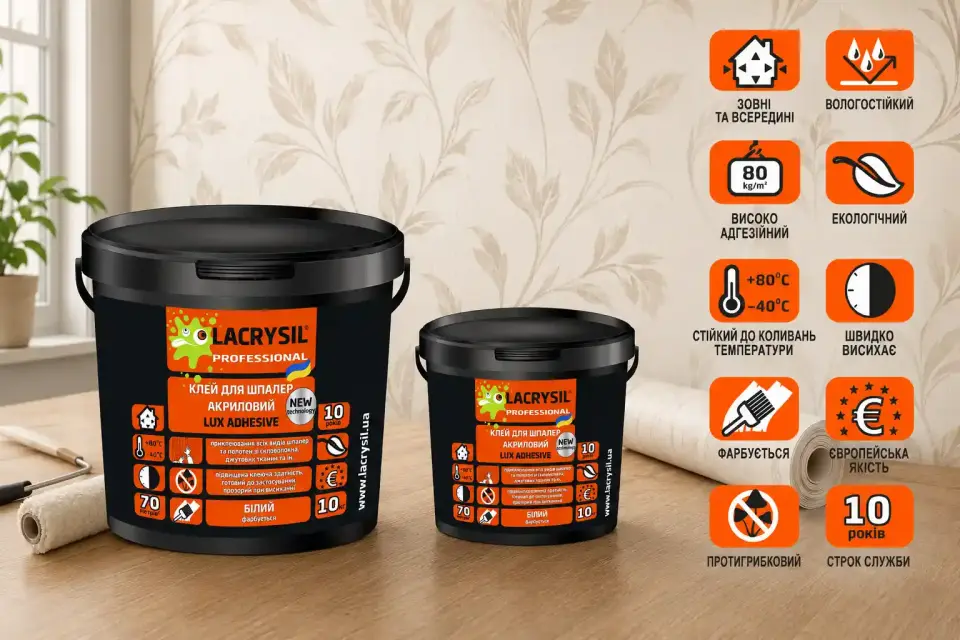
  • available in white packaging variants of 2.5 kg, 5 kg, and 10 kg.
Where to use
  • bonding fiberglass wallpapers and sheets;
  • installing heavy wallpapers with textile or vinyl coating;
  • working with paper, nonwoven, and polyester wallpaper bases;
  • bonding textured, embossed, and tufted wallpapers;
  • fixing jute fabrics;
  • application on concrete, aerated concrete, brick, plasterboard, plaster, wood, and wood-based materials.
How to choose a variant
  • 2.5 kg is convenient for local repair or a small area;
  • 5 kg suits a medium amount of work with heavy or textile wallpapers;
  • 10 kg is appropriate for a larger area or several rooms;
  • white color helps control application when working with wallpaper materials.
How to use
  • clean the substrate from dust, dirt, mold, grease, old coatings, paint, and loose particles;
  • treat porous or weakened surfaces with TM Lacrysil primer concentrate diluted 1:10 and dry;
  • stir the adhesive until uniform;
  • apply the adhesive to one contact surface and distribute evenly;
  • join the surfaces, press evenly, and fix for approximately 10-15 minutes;
  • remove excess fresh adhesive with damp material and paint wallpaper no earlier than one day after bonding.

Compatibility table
Material / Base Compatible
Concrete, brick, gypsum, plasterboard
Stone, granite, marble
Wood, chipboard, fiberboard, MDF, plywood, OSB
Tile, ceramic, porcelain
Primed metal, galvanized metal
Plastic, PVC
Polystyrene
FAQ: use, consumption, and common mistakes
  • What is it suitable for?
    Acrylic adhesive for installing fiberglass, vinyl, textile, textured, and heavy wallpapers on traditional construction substrates.

  • When is it not suitable?
    Do not use as a replacement for mechanical fixing where the element manufacturer requires anchors or dowels; do not bond over dust, grease, or weak layers.

  • What is the consumption or yield?
    Product specification guide: 0.14 - 0.3 kg/m². For an exact estimate, consider area, joint size, application method, and substrate condition.

  • How long does the layer dry or form?
    Product specification guide: 24 hours. Cold, humidity, or a thick layer can increase the waiting time before loading.

  • What are the common mistakes?
    Weak substrate preparation, loading too early, uneven pressing, and choosing adhesive without considering element weight.

Video
Reviews (0)

Similar products

2 similar products